
AAC block machines produce Autoclaved Aerated Concrete blocks for modern construction. Runding AAC can provide complete AAC block machine and production line solutions for investors wishing to build or modernize an AAC block factory.
Because the process is continuous and technical, small problems can affect block quality, efficiency, and profitability. This guide explains common AAC block machine problems, possible causes, and practical solutions for daily production.
Raw Material Preparation Problems
Raw material preparation is the first stage of AAC block production. Typically, fly ash or sand, cement, lime, gypsum, aluminum powder, and water are the primary ingredients. If raw materials are not prepared correctly, later production problems may appear during pouring, pre-curing, cutting, or autoclaving.
Common Problems in Raw Material Preparation
| Problem | Possible Cause | Solution |
| Slurry is too coarse | The ball mill grinding time is too short | Increase grinding time and check fineness |
| Slurry density is unstable | Water ratio changes or poor mixing | Use accurate density control and regular testing |
| The lime reaction is unstable | Lime quality varies | Test lime activity before production |
| Sand slurry settles quickly | Poor slurry tank agitation | Check agitator speed and tank design |
| Raw material blockage | Moisture, lumping, or poor silo flow | Add an anti-blocking device and clean the silo regularly |
Practical Solution
Factories should build a raw material testing routine. Regular checks should be made for slurry fineness, density, lime activity, cement quality, and moisture content. If raw materials change, the production formula should be adjusted before mass production.
Batching System Accuracy Problems
The batching system controls the material ratio. If the weighing system is inaccurate, the AAC block may have unstable density, poor strength, cracking, or abnormal expansion.
Common Batching Problems
| Problem | Possible Cause | Production Impact |
| Weighing error | Load cell failure or calibration problem | Formula deviation |
| Cement or lime overfeeding | Valve closing delay | High strength variation |
| Aluminum powder dosage error | Manual error or unstable feeder | Poor aeration or collapse |
| Water addition inaccurate | Flowmeter failure | Slurry density changes |
| Material discharge delay | Blocked valve or poor control signal | Mixing cycle instability |
Solutions
The weighing system should be calibrated regularly. Load cells, pneumatic valves, screw conveyors, and flowmeters should be inspected before production. For aluminum powder, the feeding amount must be especially accurate because it directly affects expansion height, pore structure, and block density.
Mixing and Pouring Problems
Mixing and pouring determine whether the raw materials are evenly blended. Poor mixing may cause uneven pores, low strength, cracks, and surface defects.
Typical Issues with Pouring and Mixing
| Problem | Possible Cause | Solution |
| Slurry is not uniform | Mixer speed too low or mixing time too short | Adjust mixing time and blade condition |
| Poor expansion after pouring | Aluminum powder reaction is weak | Check aluminum quality, temperature, and formula |
| Slurry over-expands | Too much aluminum powder or high temperature | Reduce aluminum dosage or control slurry temperature |
| Cake collapse | Poor formula balance or weak green strength | Adjust lime, cement, gypsum, and pre-curing time |
| Uneven pore structure | Incomplete mixing | Improve mixer efficiency and feeding sequence |
Practical Tips
The slurry temperature should be controlled within a suitable range. Aeration may be sluggish if the temperature is too low. A reaction that is too rapid could result in unstable expansion if it is too high. Operators should record slurry temperature, pouring time, expansion height, and pre-curing performance for each batch.
Mould and Side Plate Problems
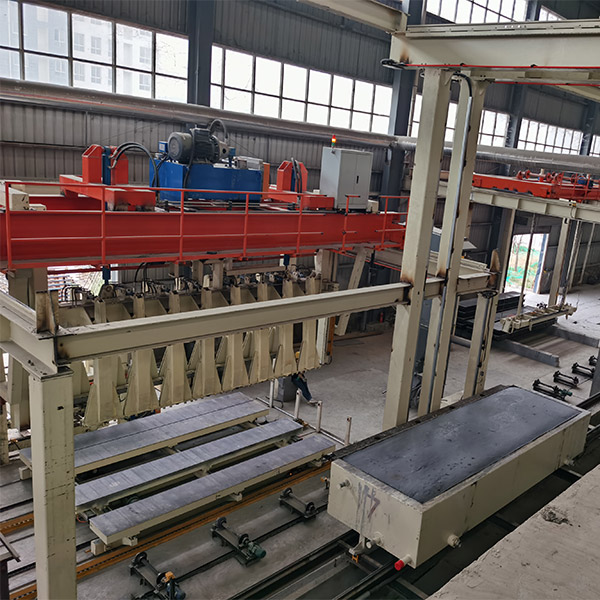
The mould system forms the AAC green cake before cutting. Mould quality affects cake shape, demoulding performance, and cutting accuracy.
Common Mould Problems
| Problem | Possible Cause | Solution |
| Slurry leakage | Worn sealing strips or poor mould locking | Replace seals and check locking system |
| Cake sticks to mould | Insufficient oiling or rough mould surface | Clean mould and apply release oil evenly |
| Mould deformation | Long-term use or poor steel structure | Repair or replace damaged mould |
| Uneven cake surface | Mould not level | Adjust mould position and track level |
| Side plate misalignment | Positioning device worn | Check side plate locking and alignment |
Maintenance Advice
Moulds should be cleaned after each use. Release oil should be applied evenly, but not excessively. Too much release oil can affect surface quality, while too little oil can cause sticking and damage during demoulding.
Pre-Curing Problems
Pre-curing allows the poured AAC slurry to gain enough green strength for cutting. If pre-curing is too short, too long, too hot, or too cold, the cutting process may become unstable.
Pre-Curing Problems and Solutions
| Problem | Cause | Solution |
| Green cake too soft | Pre-curing time too short or temperature too low | Extend pre-curing time and control room temperature |
| Green cake too hard | Pre-curing time too long | Shorten pre-curing cycle |
| Cracks appear before cutting | Fast temperature change or formula issue | Stabilize curing temperature and adjust formula |
| Cake surface dries | Poor humidity control | Maintain suitable humidity |
| Uneven hardness | Uneven pre-curing room temperature | Improve air circulation and heating control |
Key Control Points
The green cake should be just solid enough to cut without being overly so. If the cake is too soft, cutting wires may drag and deform it. If it is too hard, cutting wires may break or create rough surfaces.
Cutting Machine Problems
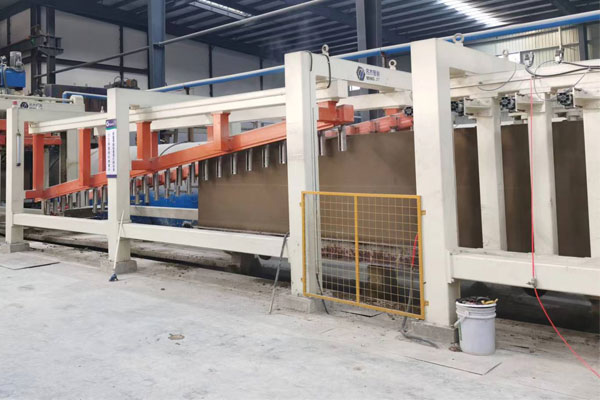
One of the most crucial components in the manufacturing of AAC blocks is the cutting machine. It controls block size, surface smoothness, and finished product appearance.
Common Cutting Problems
| Problem | Possible Cause | Solution |
| Block size is inaccurate | Wire spacing error or frame misalignment | Adjust wire spacing and cutting frame |
| Cutting surface is rough | Worn or loose cutting wire | Replace wire and adjust tension |
| Wire breaks frequently | Green cake too hard or wire tension too high | Adjust pre-curing time and wire tension |
| Block edge damage | Cake too soft or cutting speed unstable | Improve green strength and control cutting speed |
| Horizontal cut uneven | Wire sagging or poor levelness | Check horizontal wire tension and alignment |
Vertical Cutting vs Horizontal Cutting Issues
| Cutting Section | Common Issue | Main Solution |
| Vertical cutting | Uneven width or poor side edges | Check vertical wire position and frame stability |
| Horizontal cutting | Uneven block thickness | Adjust wire levelness and tension |
| Cross cutting | Length deviation | Check cutting trolley positioning |
| Side trimming | Waste edge is not clean | Adjust side trimming wire and cutting path |
A high-quality AAC cutting machine should have a rigid frame, accurate positioning, stable wire tension, and easy size adjustment. Regular cleaning is also necessary because slurry residue can affect movement accuracy.
Autoclave Curing Problems
Autoclaving is the process that gives AAC blocks final strength. The blocks are cured using high-temperature, high-pressure steam. Autoclave problems can lead to low strength, cracking, incomplete curing, or safety risks.
Common Autoclave Problems
| Problem | Possible Cause | Solution |
| Block strength is low | Insufficient pressure or curing time | Check steam pressure and extend curing cycle |
| Blocks crack after curing | Temperature rise or pressure release too fast | Control heating and pressure release speed |
| Uneven curing | Poor steam distribution | Check steam pipes and trolley arrangement |
| Autoclave door leakage | Seal aging or poor locking | Replace sealing ring and inspect locking device |
| Condensate accumulation | Drainage system blocked | Clean condensate drain regularly |
Safety Reminder
Autoclaves are pressure vessels. Operators must follow safety procedures strictly. Regular inspections are necessary for pressure gauges, safety valves, door locks, seals, and control systems. Never open the autoclave before pressure is fully released.
Separating and Packing Problems
After autoclaving, AAC blocks need to be separated, stacked, and packed. Poor handling can damage finished blocks and reduce the qualified product rate.
Common Finished Product Handling Problems
| Problem | Cause | Solution |
| Blocks stick together | Cutting gap too small or insufficient separation | Improve cutting accuracy and use separator |
| Corners break during handling | Weak strength or rough handling | Improve curing quality and adjust gripper pressure |
| Stack is unstable | Uneven block size or poor palletizing | Improve cutting accuracy and stacking program |
| Packing is loose | Poor packing tension | Adjust packing machine |
| High breakage rate | Forklift or conveyor impact | Train operators and optimize transfer speed |
Solution
Finished AAC blocks should be handled with stable lifting devices, suitable clamps, and controlled transfer speed. Packing should keep blocks stable during storage and transportation.
Electrical and Control System Problems
Modern AAC block machines often use PLC control, sensors, motors, pneumatic components, and electrical cabinets. Electrical problems can stop production quickly.
Common Control System Problems
| Problem | Possible Cause | Solution |
| Machine does not start | Power failure or emergency stop activated | Check power supply and safety switches |
| Sensor signal missing | Sensor damaged or dirty | Clean or replace sensor |
| Motor overload | Mechanical blockage or high load | Check mechanical parts and motor current |
| PLC alarm appears | Program or component error | Check alarm code and electrical wiring |
| Pneumatic valve not working | Low air pressure or valve failure | Check air compressor and valve condition |
Maintenance Tips
Electrical cabinets should be kept clean and dry. Operators should not randomly change PLC settings. Sensors, cables, terminals, and control buttons should be checked regularly to avoid unexpected shutdowns.
Hydraulic and Pneumatic System Problems
Mould movement, cutting machine placement, lifting, clamping, and material handling are all common applications for hydraulic and pneumatic systems.
Common Problems
| Problem | Cause | Solution |
| Cylinder moves slowly | Low pressure or oil leakage | Check pump, seals, and pressure setting |
| Pneumatic action is weak | Low air pressure | Check the compressor and air pipeline |
| Oil leakage | Seal wear or loose joint | Replace seals and tighten joints |
| Abnormal noise | Air in hydraulic system or pump wear | Exhaust air and inspect the pump |
| Unstable movement | Valve blockage or poor lubrication | Clean the valve and maintain the system |
Regular inspection of oil level, air pressure, seals, hoses, and valves can reduce machine failure.
Boiler and Steam System Problems
The boiler provides steam for autoclave curing. If steam supply is unstable, production quality and cycle time will be affected.
Steam and Boiler Issues
| Problem | Possible Cause | Solution |
| Steam pressure unstable | Boiler capacity insufficient | Match boiler capacity with autoclave demand |
| Slow pressure rise | Poor combustion or heat transfer | Clean boiler and check fuel system |
| High fuel consumption | Low boiler efficiency | Improve insulation and maintenance |
| Steam leakage | Pipe or valve leakage | Repair steam pipeline |
| Water quality issue | Poor water treatment | Use proper water softening system |
Steam system design should match AAC plant capacity. An undersized boiler can become a production bottleneck.
Common AAC Block Quality Problems
Many machine problems finally appear as product quality problems. Operators should use finished block defects to trace possible machine or process causes.
AAC Block Quality Troubleshooting Table
| Block Problem | Possible Machine or Process Cause | Solution |
| Low strength | Poor raw material ratio, weak curing | Adjust formula and autoclave cycle |
| High density | Poor aeration or low aluminum dosage | Check aluminum powder and slurry temperature |
| Cracks | Poor pre-curing or fast autoclave pressure change | Control curing schedule |
| Uneven size | Cutting machine error | Adjust the cutting wires and frame |
| Rough surface | Worn cutting wires | Replace wires |
| Broken corners | Poor handling or low green strength | Improve handling and pre-curing |
| Blocks sticking | Poor cutting gap or separation system issue | Improve cutting and separating process |
Preventive Maintenance Schedule
A preventive maintenance system is better than emergency repair. AAC block plants should create daily, weekly, and monthly maintenance plans.
Maintenance Schedule
| Frequency | Maintenance Tasks |
| Daily | Clean cutting wires, check sensors, inspect moulds, check air pressure |
| Weekly | Lubricate guide rails, check bolts, inspect conveyors, and test the weighing system |
| Monthly | Calibrate batching system, inspect hydraulic system, check autoclave seals |
| Quarterly | Inspect the boiler, motors, reducers, electrical cabinet, and control system |
| Yearly | Full production line inspection, replace worn parts, and safety inspection |
Good maintenance reduces downtime and extends machine service life.
How Runding AAC Helps Solve AAC Machine Problems
For long-term production consistency, selecting a trustworthy AAC block machine provider is crucial. A professional manufacturer should not only provide machines, but also offer plant design, installation support, operator training, spare parts, and troubleshooting guidance.
Runding AAC provides complete AAC block machine and production line solutions, including raw material preparation systems, batching systems, mixers, moulds, cutting machines, autoclaves, separating systems, packing systems, and control systems. For investors and factory owners, working with an experienced supplier can help reduce equipment matching problems and improve production efficiency.
Runding AAC can also support customers with customized equipment configuration based on plant capacity, raw materials, factory layout, automation level, and local production needs.
Common AAC block machine problems can result from unstable raw materials, inaccurate batching, poor mixing, mould leakage, weak pre-curing, cutting errors, autoclave issues, or poor maintenance. These may cause cracks, uneven sizes, low strength, breakage, and downtime.
Stable production needs raw material testing, regular maintenance, operator training, process records, and inspections.