
AAC bucket elevators ensure stable vertical transportation of cement, lime, gypsum, and fly ash, supporting continuous AAC production processes with reliable material flow.
Proper maintenance reduces downtime risks, improves equipment efficiency, extends service life, and allows Custom solutions for different AAC plant layouts.
Key Maintenance Areas
Bucket Inspection and Replacement
Buckets are the direct components that carry AAC raw materials. During operation, they continuously experience loading impact and material friction.
Common inspection points include:
- Bucket deformation
- Bolt looseness
- Bucket spacing
- Connection strength
- Material leakage
Damaged buckets can affect lifting efficiency because uneven loading creates additional vibration and mechanical stress.
| Inspection Item | Maintenance Method |
| Bucket Body | Check cracks, deformation, and wear marks |
| Fasteners | Tighten loose bolts regularly |
| Bucket Arrangement | Maintain correct spacing |
| Damaged Parts | Replace worn buckets immediately |
For AAC plants handling large amounts of powder materials, maintaining bucket condition helps ensure stable transportation volume and reduces secondary equipment impact.
Belt Maintenance
- Tension condition
- Surface wear
- Joint quality
- Running alignment
An excessively loose belt may cause slipping, while excessive tension can increase stress on the driving system.
Chain Maintenance
For chain bucket elevators, inspection should focus on:
- Chain elongation
- Lubrication condition
- Link wear
- Sprocket engagement
| Component | Common Problem | Maintenance Action |
| Belt | Looseness or deviation | Adjust tension and alignment |
| Chain | Wear and elongation | Lubricate and replace damaged sections |
| Joint Area | Weak connection | Reinforce or replace |
Two driving forms, belts and chains, are available for bucket elevators per different design standards. Frequent maintenance inspections help preserve proper tension and alignment of either system.
Drive System Maintenance
Regular inspection should include:
| Component | Inspection Content |
| Motor | Temperature, vibration, abnormal noise |
| Reducer | Oil level and leakage condition |
| Coupling | Connection stability |
| Shaft | Rotation condition |
Excessive vibration or abnormal noise often indicates early mechanical problems. Detecting these signals during routine inspection helps avoid larger failures.
Tensioning System Adjustment
Maintenance points:
- Check tension regularly
- Adjust according to operating conditions
- Avoid excessive tightening
- Ensure smooth movement of tensioning components
A properly adjusted tensioning system improves running stability, especially for AAC production lines requiring long continuous operation.
Lubrication Management
When lubrication is inadequate, units run hotter, wear faster and become less dependable. Yet surplus lubricant traps dust deposits, which compromises the performance of mechanical components.
| Lubrication Area | Maintenance Requirement |
| Bearings | Check lubrication condition and prevent overheating |
| Reducer | Maintain proper oil level and replace oil when required |
| Drive Components | Ensure smooth transmission and reduce friction |
| Tensioning Parts | Keep moving components operating smoothly |
Dust and Material Accumulation Control
AAC raw materials create fine dust during conveying, so regular cleaning prevents accumulation, reduces resistance, and maintains stable bucket elevator performance.
Inspecting head sections, tail areas, and internal casing regularly helps avoid blockages, lower motor load, and improve continuous AAC production reliability.
Multi-Cycle Maintenance Arrangement
| Maintenance Frequency | Main Tasks |
| Daily Inspection | Check abnormal noise, vibration, temperature, and material flow |
| Weekly Inspection | Inspect bolts, belt or chain condition, and lubrication status |
| Monthly Inspection | Check drive system, tension device, and major wear components |
| Periodic Maintenance | Replace damaged parts and perform complete equipment inspection |
Daily monitoring is especially important for continuous AAC production lines because early detection can prevent small problems from affecting the whole manufacturing process.
Troubleshooting Guide
| Problem | Possible Cause | Solution |
| Reduced Conveying Capacity | Bucket wear or material blockage | Check buckets and clean accumulated materials |
| Belt Deviation | Incorrect tension or alignment | Adjust tension system and inspect installation |
| Excessive Vibration | Loose components or imbalance | Tighten parts and check rotating components |
| Abnormal Noise | Bearing wear or insufficient lubrication | Inspect and maintain mechanical parts |
| Material Leakage | Damaged buckets or poor sealing | Replace damaged components |
Effective maintenance centers on investigating underlying fault triggers, not just substituting defective parts. This strategy reduces recurring malfunctions and strengthens equipment’s long-term dependability.
Considerations for Different AAC Plant Conditions
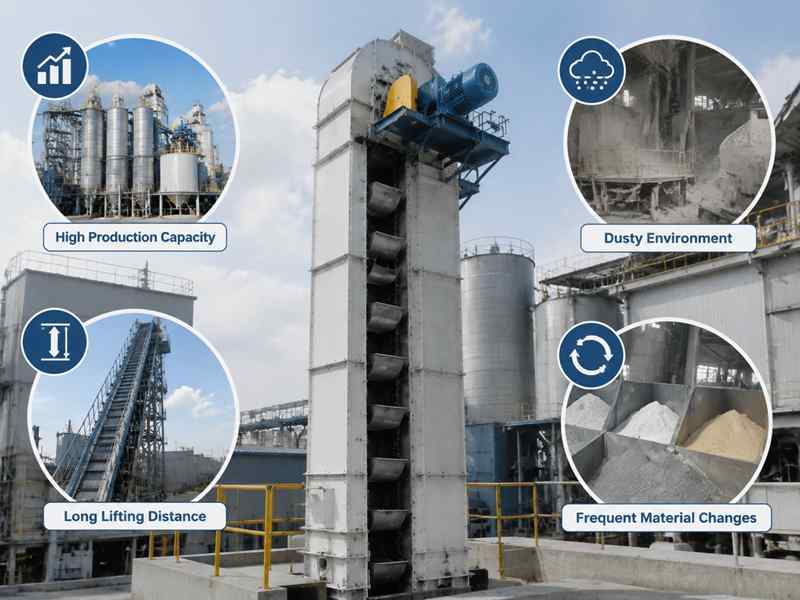
AAC bucket elevator maintenance requirements may vary depending on production capacity, material characteristics, and operating environment.
For plants with higher output requirements, equipment inspection frequency should be increased because longer operating hours create greater mechanical stress.
- High Production Capacity: Frequent wear inspection and continuous monitoring for long-term operation stability.
- Dusty Environment: Regular cleaning and sealing checks to reduce dust impact on mechanical components.
- Long Lifting Distance: Belt or chain tension adjustment with alignment inspection for smooth conveying.
- Frequent Material Changes: Bucket condition checks and conveying parameter adjustment for flexible operation.
Spare Parts Management for AAC Bucket Elevator
Spare parts preparation is an important part of continuous AAC production management. Since bucket elevators operate under repeated mechanical stress, some components naturally experience wear during long-term operation.
Key spare parts usually include:
- Buckets: Replace damaged or deformed buckets to maintain stable conveying capacity.
- Belts or Chains: Ensure reliable material lifting and prevent unexpected shutdown caused by transmission failure.
- Bearings: Maintain smooth rotation and reduce vibration caused by wear.
- Fasteners: Prevent loose connections from affecting equipment stability.
- Sealing Components: Reduce dust leakage and protect internal mechanical parts.
Operator Inspection and Maintenance Skills
Operators who understand basic inspection methods can identify early warning signs before they develop into major problems.
- Sound Monitoring: Detect abnormal noise from bearings, chains, or drive components.
- Temperature Checking: Identify overheating conditions in motors and rotating parts.
- Running Observation: Check whether buckets move smoothly without vibration or deviation.
- Material Flow Monitoring: Ensure stable feeding and discharge performance.
A simple but consistent inspection routine helps production teams maintain equipment reliability and reduce unnecessary maintenance costs.
Extending the Service Life
| Maintenance Strategy | Practical Effect |
| Regular Inspection | Finds potential problems before equipment failure |
| Proper Lubrication | Reduces friction and component wear |
| Timely Replacement | Prevents damaged parts from affecting other systems |
| Correct Operation | Avoids overload and improper running conditions |
Equipment longevity in AAC production lines hinges on maintenance quality. Without regular checks and servicing, even sturdy bucket elevators will gradually lose operating performance.
Checklist
| Inspection Item | Recommended Action |
| Bucket Condition | Check wear, deformation, and connection strength |
| Belt or Chain System | Inspect tension, alignment, and wear status |
| Drive Unit | Monitor vibration, temperature, and lubrication |
| Casing Structure | Check dust accumulation and material leakage |
| Safety Components | Verify protective devices and inspection access |
Through regular inspection, proper lubrication, timely replacement, and Custom design optimization, AAC plants can achieve reliable operation and longer equipment service life.