
Choose a belt bucket elevator for an AAC plant when the proposed belt, buckets and discharge arrangement are suitable for the actual material and operating duty. Consider a chain design where temperature, coarse particles or demanding mechanical conditions justify it. Neither choice is reliable until the supplier confirms the material envelope, required lift, sustained throughput and service access for the specific installation.
Which Material Will This Elevator Actually Carry?
Start with one material stream and one location on the process drawing. Sand, fly ash, lime and other ingredients do not create interchangeable handling duties simply because they belong to the same AAC line. Record whether the elevator receives material directly from delivery, after crushing or from an intermediate store.
Describe the material at the elevator inlet, including its expected variation. A powder delivered dry may pick up moisture in storage, while a crushed product may contain occasional pieces larger than the normal grading. The selection should address credible operating conditions rather than only the clean sample supplied during quotation.
- Identify material composition, bulk density range and moisture range.
- Record particle grading, largest expected pieces and abrasive characteristics.
- State normal material temperature and credible short excursions.
- Describe feed regularity, daily running hours and required output.
- Show the receiving and discharge equipment on the layout.
Use the AAC bucket elevator product information to start the equipment discussion. Ask the supplier to return a selection tied to your data sheet, with missing information and exclusions clearly identified. A model name without its design assumptions is not enough to compare competing offers.
When Is a Belt Design Worth Considering?
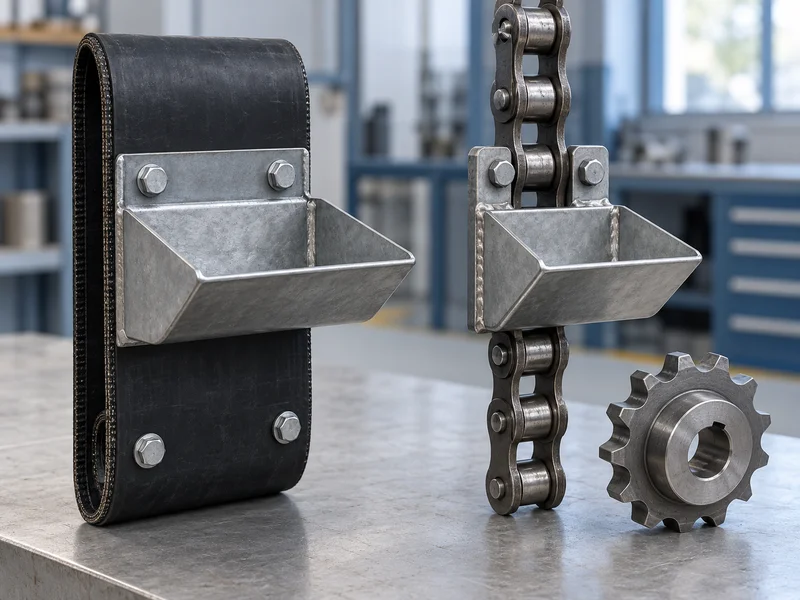
A belt design deserves consideration for suitably flowing material within the belt system’s confirmed temperature and loading limits. It can provide an economical solution, but the complete assembly matters: belt reinforcement, splice, bucket fasteners, pulleys and take-up all affect suitability. Avoid treating every belt elevator as the same light-duty product.
Ask how the proposed belt will behave with the supplied material rather than requesting a generic belt-versus-chain ranking. Sharp particles, irregular loading or contamination may change the selection even when average throughput is modest. The supplier should explain the provisions used to keep material from damaging the belt or interfering with its path.
Do not rule out a belt solely because the lift is tall. Specialist manufacturers offer reinforced belt systems for substantial lifting heights, so a general height limit borrowed from a different product family can be misleading. Obtain the allowable duty for the quoted assembly and confirm that its structural arrangement fits the building.
When Does a Chain Design Deserve Preference?
A chain design may be appropriate where the material or loading conditions exceed the capabilities of an otherwise suitable belt assembly. Hotter material, coarse lumps and severe wear conditions are reasons to investigate it. They are not reasons to accept any chain elevator without checking its specific limits.
Clarify which chain arrangement is offered and how buckets attach to it. The chain, sprockets, attachments and tensioning system form a working set, and their replacement requirements affect both inventory and downtime. Request drawings and service information for the quoted configuration rather than photographs of a different machine.
Chain construction does not cure poor feed control. A receiving boot can still accumulate material, and unsuitable discharge geometry can still send material back down the casing. Evaluate those problems separately instead of assuming that a stronger traction element makes the whole installation tolerant of uncontrolled operation.
Which Comparisons Should Be on the Bid Sheet?
Compare evidence for the same duty rather than assigning a universal winner to each feature. One supplier may include the drive, platforms and monitoring devices while another quotes only the elevator body. Normalize the scope before evaluating the initial purchase price.
| Decision Point | Evidence Needed From Both Bidders |
| Material compatibility | Accepted grading, moisture, temperature and density envelope |
| Required output | Sustained capacity with stated filling and feed assumptions |
| Wear and replacement | Parts list, inspection criteria and replacement method |
| Plant integration | Inlet, outlet, supports, access and control responsibilities |
| Commercial comparison | Equivalent supply boundary and documented exclusions |
Supplier literature can help identify candidate designs, but published limits belong to the named equipment and conditions. A high-temperature claim for one chain system does not establish the rating of another supplier’s bearings, seals or buckets. Require a written operating envelope for the complete proposed machine.
How Should Capacity Be Matched to AAC Demand?
Separate mass flow from volumetric flow. If quotations use different units, reconcile them using the bulk density applicable to the material at the elevator inlet. A capacity expressed in tonnes per hour cannot be compared directly with a cubic-metre-per-hour figure.
For an illustrative calculation, 18 tonnes per hour at a bulk density of 1.2 tonnes per cubic metre corresponds to 15 cubic metres per hour. At 0.9 tonnes per cubic metre, the same mass flow occupies 20 cubic metres per hour. These assumed values demonstrate why density variation belongs in the specification; they are not recommended AAC equipment ratings.
Next, compare the elevator’s operating schedule with the process demand. If it replenishes a bin during limited hours, its required replenishment rate may exceed the average consumption rate. If it receives material in bursts, define how the upstream feeder limits those bursts to the agreed duty.
Review the entire raw material preparation section when setting this capacity. The outlet chute, receiving bin and following conveyor must accept the proposed flow. Increasing elevator capacity alone provides little benefit if another interface repeatedly stops the stream.
Why Do Filling and Discharge Need Separate Review?
The traction choice and the discharge method are related design decisions, but they are not interchangeable labels. Ask how the proposed buckets fill, how material leaves them and what operating speed the design requires. Material behaviour should support that arrangement across the agreed supply range.
Sticky or poorly flowing material warrants particular attention. Changing from belt to chain may leave the same buildup problem in the bucket, boot or outlet. Discuss representative material testing when the supplier cannot establish reliable filling and release from existing evidence.
Include dust collection connections and chute transitions in the interface review. Identify who supplies each connection and who checks that the adjoining system is compatible. An enclosed casing alone does not answer every question about dust control at transfer points.
What Access and Monitoring Should Be Specified?
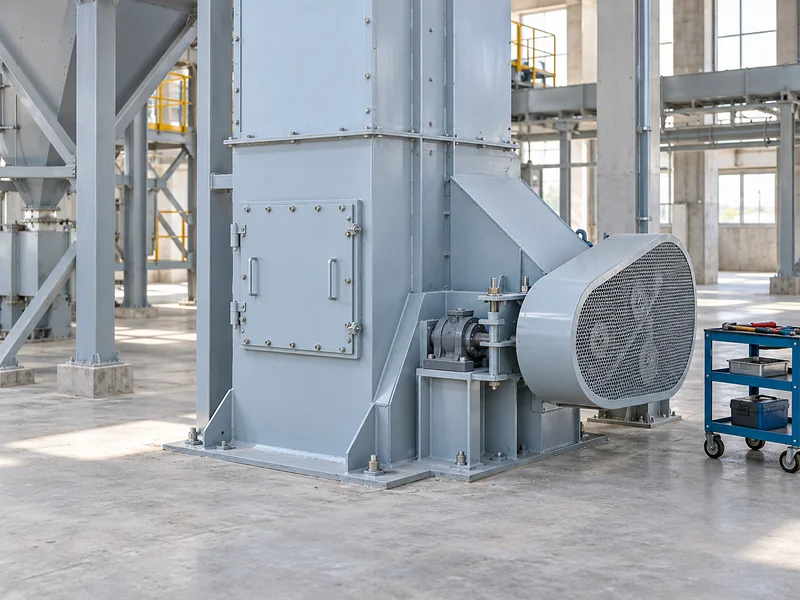
Provide access for the actual service tasks before finalizing the building layout. The head, boot, drive and take-up need appropriate inspection and working space, while replacement parts need a practical removal route. A compact footprint on a general arrangement drawing can conceal substantial service clearance requirements.
For a belt proposal, discuss inspection of tracking, belt condition, splice and bucket connections. For a chain proposal, discuss chain condition, sprocket wear, attachments and adjustment requirements. Have the supplier identify inspection intervals and rejection criteria appropriate to the equipment instead of inventing a universal maintenance schedule.
Agree monitoring and shutdown functions with the equipment supplier and plant controls designer. Their assessment should address relevant failure conditions, the upstream feed response and the downstream receiving equipment. Record who supplies the devices, connects them and demonstrates their operation during commissioning.
Compare replacement logistics as part of the purchase decision. Ask which components must be held locally, their delivery times and the equipment needed to change them. A lower purchase price can become unattractive when a foreseeable replacement keeps a critical raw material stream unavailable.
What Should the Acceptance Test Settle?
The acceptance plan should use an agreed material and document its condition during the test. Measure useful delivered output over a defined period, recording interruptions, return material and any relevant operating adjustments. A brief unloaded run confirms very little about the intended conveying duty.
Include interface checks with the actual feeder and receiving equipment. Confirm that access provisions, monitoring functions and operating documentation match the ordered scope. Where a test condition differs from the purchase specification, record the limitation explicitly rather than treating it as an unconditional pass.
Select the belt or chain proposal whose documented operating envelope covers the plant’s requirements and whose integration details are complete. Ask Runding to review the material sheet, layout and operating schedule together when preparing the elevator proposal. Resolve any unverified duty before the equipment and surrounding structure are committed.