
Size an AAC slurry tank’s working volume from the largest planned difference between slurry withdrawals and replenishment, while respecting the minimum level needed for reliable mixing and pumping. Add the agreed interruption reserve without counting it twice, then select a vessel that also provides the required upper operating allowance. The tank’s advertised total volume is not the same as the slurry volume available for batching.
Which Slurry Stream Is Being Stored?
Identify the stream before calculating storage. Fresh ground sand slurry and return slurry can have different supply patterns, solids contents and process restrictions. Treat them as separate duties unless the plant design explicitly combines them.
State the permitted slurry condition and the purpose of the tank. A buffer between grinding and batching has a different scheduling problem from a vessel receiving intermittent returns. The calculation should describe which upstream interruption or downstream demand pattern the storage is intended to accommodate.
Review the AAC slurry tank and agitator arrangement with those conditions in mind. Require the quotation to distinguish the vessel capacity from the inventory available between its operating limits. A model marked with a cubic-metre capacity needs an accompanying explanation of usable levels and operating limits.
How Is Batch Demand Converted to Slurry Volume?
Begin with the quantity of the relevant slurry required by each approved batch recipe. If the recipe uses slurry mass, convert it to volume using the applicable slurry density. If it starts with a dry-solids requirement, establish the slurry solids fraction before calculating the wet slurry mass and volume.
For an illustrative recipe, suppose a batch needs 1,500 kilograms of dry solids supplied in slurry at 60% solids by mass. The corresponding slurry mass is 2,500 kilograms; at an assumed slurry density of 1,500 kilograms per cubic metre, that occupies about 1.67 cubic metres. These assumed values demonstrate the calculation and are not a recommended AAC recipe.
Keep the density and solids information consistent with the actual stream. A concentration expressed by volume is not interchangeable with a mass fraction. Have the process team confirm the conversion and measurement basis used in the storage calculation.
Review the range of recipes expected during a shift. The largest slurry withdrawal may not coincide with the highest finished-product output. A demand schedule based on only one representative recipe can miss the product sequence that draws down the tank most quickly.
Why Is Average Hourly Demand Not Enough?
Batching can withdraw slurry in short events while replenishment follows a different pattern. The tank must cover the resulting low points, not just balance the day’s total supply and consumption. Two streams with identical hourly averages can still leave the tank below its usable minimum between deliveries.
Prepare a time-based balance showing each withdrawal and each credible refill. Start from a defined opening inventory and calculate the quantity remaining after each event. Test the schedule over the full repeating pattern, including shifts and planned preparation stops.
Use the actual delivery rate to the tank rather than the mill’s catalogue output alone. Transfers, sampling, interruptions and accepted slurry condition may affect when usable material becomes available. Identify which delays belong to normal operation and which are covered by a separate reserve assumption.

How Can a Simple Buffer Calculation Be Built?
Consider an illustrative schedule that withdraws two cubic metres every ten minutes. If replenishment is unavailable for 40 minutes and four withdrawals occur in that interval, eight cubic metres must be available above the minimum usable inventory. The calculation must state whether a withdrawal occurs at either boundary so that a fifth event is not accidentally omitted.
Suppose the designer requires four cubic metres to remain for the approved mixing and pumping conditions. With a separately justified two-cubic-metre operating reserve, the illustrative upper operating inventory becomes 14 cubic metres. The vessel still needs whatever upper allowance the design requires; its total volume cannot be selected from the 14-cubic-metre figure alone.
| Volume Component | Illustrative Planning Basis |
| Minimum retained inventory | 4 cubic metres, assumed for the example |
| Planned drawdown | 8 cubic metres for four scheduled withdrawals |
| Separate operating reserve | 2 cubic metres with a stated purpose |
| Upper operating inventory | 14 cubic metres in this example |
| Total vessel selection | Requires the supplier’s additional upper allowance |
These numbers illustrate bookkeeping rather than equipment selection. A real proposal needs the actual low-level requirement, withdrawal schedule, refill capability and permitted slurry residence conditions. The value of the method is that each volume allowance has an identifiable reason.
What Determines the Minimum Usable Level?
The minimum level must satisfy the selected agitator and outlet arrangement, along with the pump’s operating requirements. It cannot be assumed to be zero simply because the vessel has a bottom outlet. Ask the equipment designers to establish the usable lower limit for the actual slurry and geometry.
Discuss how mixing performance changes as the level falls. The ability to keep the stored material suitably uniform is part of usable capacity. Slurry left below the approved operating level should not be counted as dependable batch supply.
Also review level measurement and the response to low inventory. The controls should provide enough warning for the agreed operating response before batching becomes unreliable. Setpoints belong to the approved design and commissioning process rather than a generic percentage of tank height.
How Do Pumping and Refill Rates Affect Tank Size?
A sufficient volume does not guarantee that slurry reaches the weighing or mixing system within its allowed time. Check the required transfer flow and the piping conditions separately. A large tank with an undersized delivery route can still delay every batch.
Review the slurry pump duty with the lowest permitted tank level and the actual receiving point. Confirm the slurry properties and transfer conditions used to select that pump. The tank and transfer proposal should use the same slurry properties and operating assumptions.
Check whether replenishment can restore the intended operating inventory before the next drawdown period. If average replenishment remains below sustained demand, storage merely delays the shortage. That situation requires a production or supply-capacity change, not an indefinitely larger tank.
Should the Plant Use One Tank or Several?
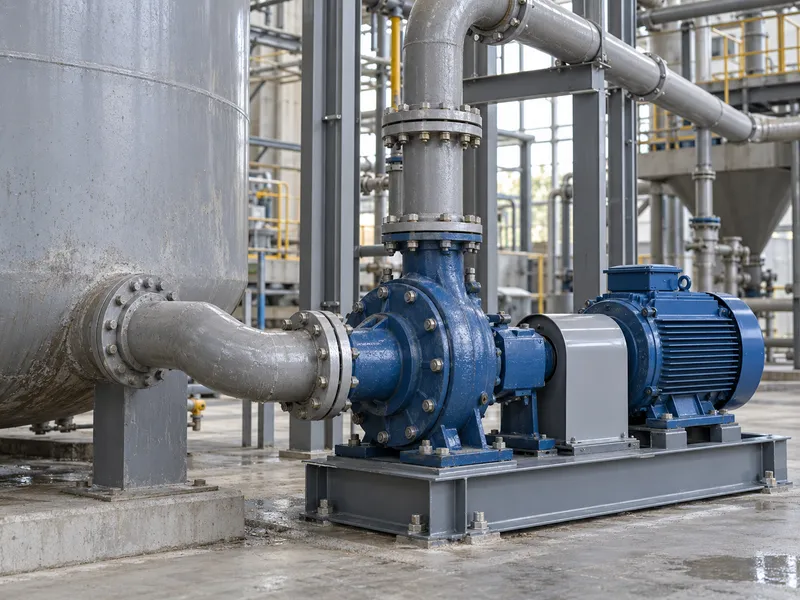
Multiple tanks may support separation of streams, maintenance or operating flexibility, but their volumes are not automatically interchangeable. Confirm which tank can supply which recipe and whether the connection arrangement permits the intended operating mode. A full tank isolated for inspection does not provide available production buffer.
For any proposed standby arrangement, show how the remaining equipment supports the agreed demand when one unit is unavailable. Include transfer and mixing capability, not just nominal combined volume. Make any reduced-output condition explicit.
Avoid adding storage without reviewing residence time and slurry condition. The process team should define acceptable holding and mixing conditions for each stream. More volume can complicate control and cleaning if the plant rarely uses it.
Which Operating Scenarios Should the Sizing Review Test?
Check the planned normal schedule first, then a limited set of credible interruptions. Useful cases can include a delayed refill, a high-demand recipe sequence or one tank being unavailable. Define the production response expected in each case so that reserve capacity has a clear objective.
Distinguish a short interruption buffer from full backup for an extended grinding stoppage. The latter can require a very different storage arrangement and may conflict with other process constraints. Agree the duration and output level the design is intended to cover.
For an existing plant, use level trends and batch timestamps to test the model. Look for repeated low points and compare them with actual refill events. Those records help identify whether the problem is insufficient working volume, late replenishment or a transfer limitation.
What Must Be Recorded Before Ordering?
The purchase specification should separate total vessel volume, upper operating inventory, minimum retained inventory and usable drawdown. Include the slurry properties, batch schedule and refill schedule supporting the selection. State reserve assumptions and any operating restrictions.
Ask for an agreed level-to-volume relationship and commissioning checks appropriate to the tank geometry. Confirm that instruments and batch records use compatible units. A level indication is useful only when operators understand how it relates to available slurry.
Send Runding the recipe demand range and preparation schedule when requesting a tank proposal. The selection should demonstrate that enough usable slurry remains at every planned batch withdrawal while the mixing and transfer equipment stays within its operating limits. That is the practical measure of a correctly sized working volume.