
An AAC production line needs enough mould frames and side plates to cover their separate return cycles at the planned casting rate, plus a justified allowance for unavailable units. Calculate each component’s time from release into production until it is ready for reuse. Then check the resulting quantities against the actual shift schedule, batch curing plan and return-route capacity before placing an order.
Why Should Moulds and Side Plates Be Counted Separately?
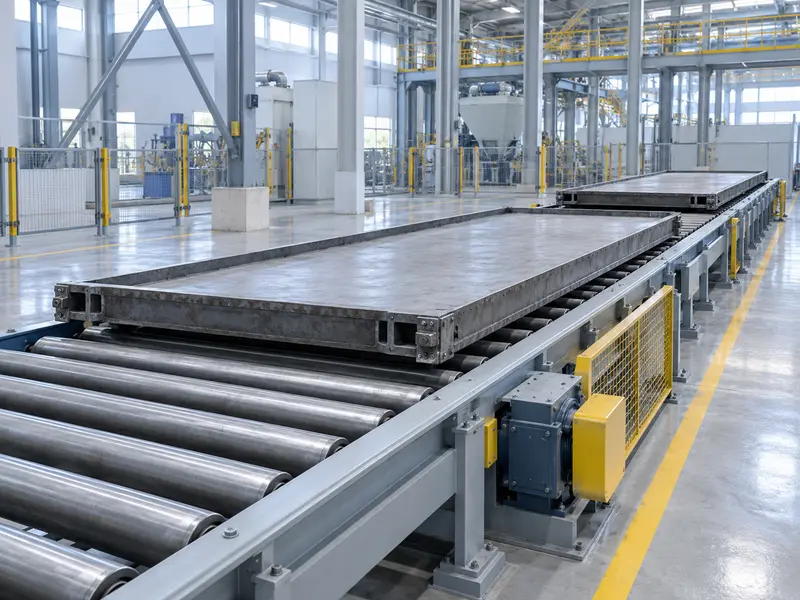
They may travel together at pouring but become available for reuse at different times. In a process where the mould frame returns after demoulding while the side plate follows the cake through later stages, the plate remains occupied longer. Ordering equal quantities simply because they form a set at pouring can therefore leave the line short of ready plates.
Confirm the actual technology before drawing the loops. Some AAC arrangements transfer the cake to a separate curing support and return the cutting platform earlier. A calculation based on another supplier’s process can assign hours of occupancy to the wrong component.
Review the mould and side plate arrangement with the plant supplier. Ask for a flow drawing showing where the parts separate and where empty, prepared units become available again. Use those points consistently when measuring cycle time.
What Production Rate Should Drive the Calculation?
Use the planned interval between successive mould starts during active casting. Annual output alone does not reveal this interval because operating days, shifts, effective hours and saleable volume per cake vary. Establish the production calendar and the product mix before deriving equipment quantities.
If the plan is expressed as finished cubic metres, convert it to the number of cakes required using the agreed saleable yield. Gross cavity volume may overstate output when trimming and product layout are ignored. Keep this conversion visible so that a quantity calculation can be updated when the product plan changes.
Distinguish the nominal equipment cycle from the sustainable plant schedule. A mixer may complete an individual operation quickly while transfer or precuring constraints limit successive mould starts. Use a rate supported by the integrated line plan rather than the fastest isolated machine.
Which Activities Belong in the Mould Return Time?
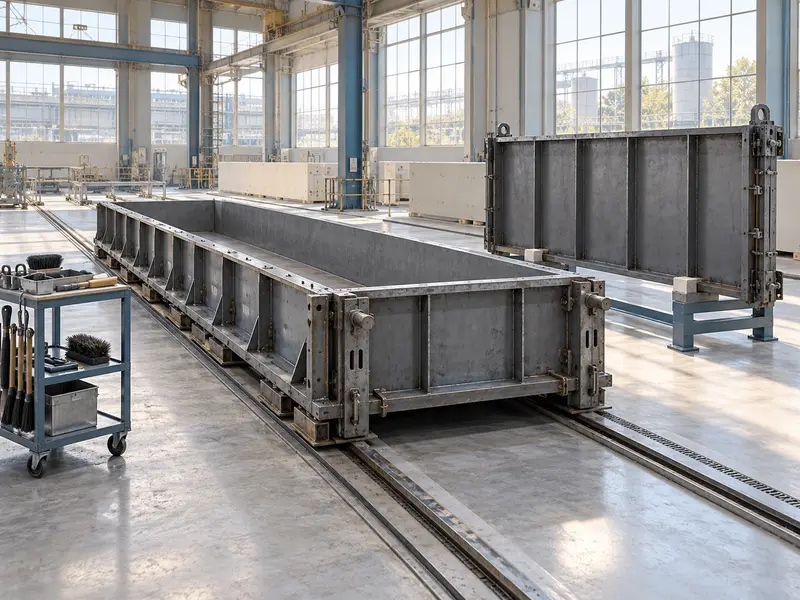
Include every period during which a frame cannot serve a new casting. Depending on the layout, this includes pouring, movement, precuring, waiting for demoulding, release, return and preparation. Omitting short transfers or queues can materially affect the count when they recur in every cycle.
Define the endpoint as ready for the next intended use, not merely empty. A returned frame awaiting cleaning, inspection or assembly with a plate is still unavailable to the pouring station. Record preparation capacity separately if several frames may arrive together.
For an operating plant, collect timestamps over representative shifts rather than timing only the fastest run. Review normal variation and identify exceptional stoppages separately. A single mean value may conceal the conditions responsible for repeated shortages.
How Is the First Quantity Estimate Calculated?
For an approximately steady flow, divide the complete return time by the interval between starts and round upward. This gives an initial estimate of the units occupied by that loop. It is a planning approximation that needs a schedule check, especially where returns occur in batches.
Consider an illustrative line starting one mould every six minutes. If a frame becomes ready again after 210 minutes, the steady-flow estimate is 210 divided by six, or 35 frames. A return time of 213 minutes gives 35.5, so the preliminary count rounds upward to 36.
If the relevant side plate loop takes 840 minutes under the same assumed start interval, its preliminary estimate is 140 plates. These invented times explain the method only; they are not recommended quantities, process times or performance promises for a particular AAC plant. Actual times and circulation routes must come from the project.
| Planning Item | Illustrative Value or Method |
| Interval between mould starts | 6 minutes during active casting |
| Frame ready-to-reuse time | 210 minutes; preliminary occupied count 35 |
| Plate ready-to-reuse time | 840 minutes; preliminary occupied count 140 |
| Schedule correction | Check simultaneous occupancy through a full operating plan |
| Additional available units | Justify separately for repair and agreed operating reserve |
Do not add percentages at several stages without showing what each allowance covers. A delay already included in the return time should not silently appear again as the same reserve. Keep the occupied count, schedule adjustment and unavailable-unit allowance separate.
Why Can Batch Curing Change the Answer?
Autoclave loading and unloading can release groups of supports rather than a smooth stream. While those supports are occupied, casting may continue to consume available units. The highest simultaneous occupancy can therefore differ from an estimate based only on average circulation time.
Build a time-based schedule covering enough cycles to include the full return pattern. Track each group through loading, waiting, curing, unloading and return as applicable to the chosen technology. At every casting start, check that the required prepared frame and plate are actually available.
Include shift boundaries. If casting stops overnight but unloading continues, the opening stock on the next shift will differ from a line where both stop together. The same daily output can require different circulating quantities under those two schedules.
Use the plant’s agreed curing programme in this model. Do not shorten process holds or readiness requirements simply to make a smaller equipment inventory appear sufficient. If the schedule exposes a shortage, address quantity, scheduling or the relevant handling constraint with the supplier.
How Much Reserve Should Be Added?
Base reserve on identifiable causes of unavailability and an agreed production objective. Examples include units removed for repair, scheduled inspection, cleaning delays or a practical operating buffer. A blanket percentage is difficult to defend when neither failure history nor replacement lead time is known.
Separate circulating reserve from components deliberately held outside production. A spare frame waiting for repair is not available reserve, and a plate of a different format may be unusable on the planned route. Maintain an inventory that distinguishes ready, occupied, under service and rejected units.
For the illustrative 35-frame estimate, suppose a reviewed schedule requires one additional ready position and the maintenance plan allows two frames to be unavailable. A proposed purchase of 38 would then have a stated basis. That arithmetic is valid only if the assumptions cover the actual schedule and do not overlap.
Can More Units Solve a Return-Route Bottleneck?
Additional units can bridge a defined delay, but they cannot create unlimited preparation or transfer capacity. If empty plates reach cleaning faster than the station can process them over a sustained period, the queue will grow. Increasing inventory alone postpones the shortage at pouring.
Check the return-route equipment and its effective operating hours. The precuring and cutting section must also have enough physical positions for the planned work in progress. Available floor space and access routes are part of the inventory decision.
Evaluate whether the proposed reserve has a usable storage location and can enter the route when needed. A spare blocked behind occupied equipment may not provide the intended operational benefit. The layout should show normal circulation and the handling of units removed from service.
What Should Be Checked During Commissioning?
Test the agreed schedule rather than demonstrating only that the first mould can be poured. Track the opening inventory, casting starts, return times and minimum ready stock through representative operation. Record where frames or plates wait and whether the reason is process timing, handling or preparation.
Compare actual simultaneous occupancy with the planning model. If the ready stock repeatedly approaches zero, determine whether the inputs were optimistic or a station is performing below its agreed duty. The remedy may involve scheduling or equipment correction rather than an immediate order for more moulds.
Use the same identification system for acceptance and subsequent operation. Consistent records make it possible to distinguish missing units from units held in a queue. They also make future expansion estimates more useful than an unverified count copied from the original quotation.
What Should the Final Quantity Schedule Show?
State the number of each compatible frame and plate family, the circulation route and the assumptions supporting the count. Attach the casting calendar and the schedule showing maximum occupancy. List reserve separately with a reason for every allowance.
Ask Runding to provide this quantity schedule with the line proposal and reconcile it with the layout before manufacturing. A defensible count shows how prepared units reach pouring throughout the intended production day. It also reveals which assumptions must be revisited if capacity, shift patterns or product formats change.