
Start reducing steam waste in AAC autoclaving by measuring consumption against accepted production, correcting verified losses, and checking how loads are scheduled. Evaluate recovery equipment after the plant understands when heat is available and where it can be used. Adding a larger boiler or another autoclave does not, by itself, improve the efficiency of the existing process.
The sequence below is an assessment framework for production and engineering teams. Changes to pressure equipment, controls, steam routing, and curing cycles require the responsible specialists and the applicable design and operating procedures.
A Practical Order of Work
- Establish the baseline. Define the steam meter boundary, the production quantity, and the comparison period.
- Restore the intended system condition. Investigate leakage, missing insulation, drainage faults, and unreliable measurements.
- Review the load schedule. Connect autoclave utilization with product availability and handling delays.
- Evaluate heat reuse. Match the available source to a real receiving demand and an engineered recovery arrangement.
- Reassess capacity. Use the corrected operating picture when deciding whether expansion is justified.
This order is a way to avoid confusing maintenance losses with a capacity shortage. A plant may ultimately need both repairs and additional equipment. The baseline should make the contribution of each proposal visible.
Compare the Opportunities Before Ranking the Investment
| Opportunity | Evidence Needed | Main Decision Constraint |
| Steam distribution repairs | Survey of leaks, insulation condition, and drainage performance | Safe access and the approved repair window |
| Better loading and scheduling | Actual load quantities, waiting times, and cycle records | Product flow and the validated curing process |
| Condensate return | Recoverable quantity, quality, temperature, and destination | Compatibility with the receiving water and steam system |
| Steam transfer or heat recovery | Source and demand profiles over time | Pressure, timing, controls, and engineered interfaces |
| Additional capacity | Demand forecast and demonstrated remaining constraint | Total installed cost and supporting utilities |
The best first project is not necessarily the largest item in the table. It is the proposal supported by reliable evidence that can be implemented without undermining product quality or equipment protection. Treat a supplier’s estimated saving as a hypothesis until the comparison method and assumptions are clear.
Look Beyond the Autoclave Nameplate
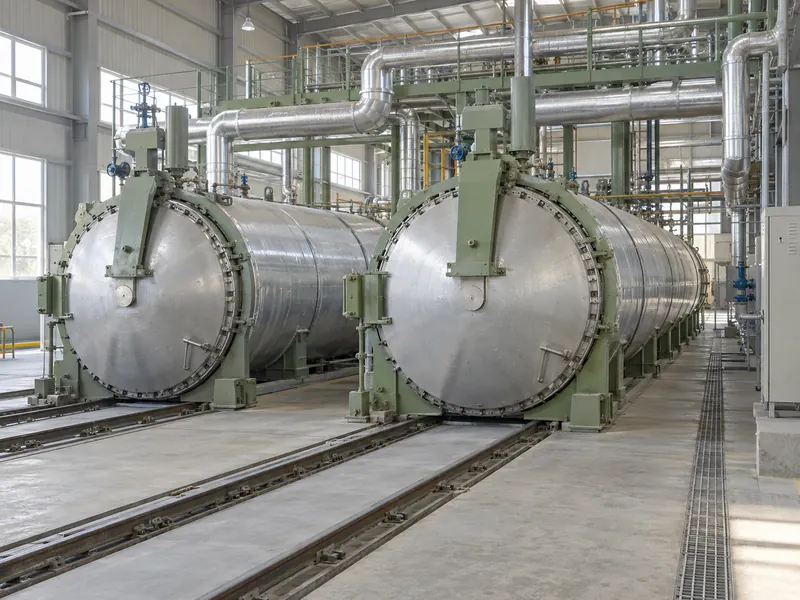
An autoclave is only one part of the steam-consuming system. Runding’s AAC autoclave product information describes the vessel, door arrangements, protective interlocks, and steam-related fittings. For an efficiency review, confirm the actual supplied configuration and its connections to the plant utilities.
A vessel’s nominal capacity tells the team little about how much accepted product passes through each real cycle. Record actual loading, production delays, and rejected output alongside consumption. Otherwise, a low-volume operating period can make an unchanged system appear less efficient.
The overview of autoclaves in AAC production provides process context. The present assessment goes further by asking which losses are measurable and which operational constraints prevent improvement. Any proposed change to the temperature, pressure, or duration of curing belongs in a separate process-validation decision, with the responsible team confirming the required product results before adopting it.
Loading Starts Before the Door Closes
Compare the planned loading sequence with the material that actually reaches the autoclave area. Include waiting for suitable product, transfer equipment, and available carriers. These delays may explain incomplete loads or poorly coordinated cycle starts without indicating a problem inside the vessel.
The AAC grouping crane belongs in that review because grouping and transfer connect cutting with later processing. Assess the installed handling arrangement against the load schedule. A faster individual movement has limited value if the next station remains unavailable.
Do not increase a load beyond its approved arrangement merely to improve a utilization figure. Product spacing, supports, circulation requirements, and handling limits belong to the validated process. Record a schedule improvement only when the resulting product and operation remain acceptable.
Maintenance First: Find the Losses That Already Have an Explanation
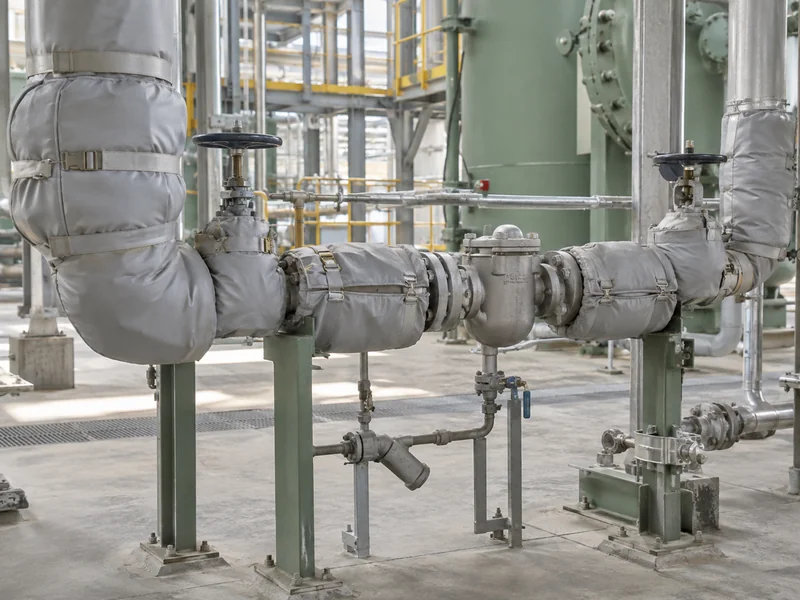
Use a qualified steam-system survey to identify leakage, damaged or absent insulation, and drainage problems. Keep each finding tied to an equipment reference and a repair action. Visible vapor, temperature, or sound alone should not be treated as a complete diagnosis.
The U.S. Department of Energy’s steam-system management guidance recommends checking leaks and traps, maintaining insulation, and considering condensate return. Returning suitable hot condensate can reduce the heating required compared with colder replacement water. The guidance supports the improvement categories, not a guaranteed saving for an AAC installation.
Give drainage findings operational attention as well as an energy label. The survey should identify whether a component is performing its intended function under the actual conditions. Replacing a device with a different type or capacity needs engineering review rather than a parts substitution based on appearance.
After an intervention, repeat the relevant check and retain the repair reference. A closed maintenance ticket shows that work was recorded; a verified result shows whether the observed problem was resolved. Keep those two pieces of evidence together.
Heat Recovery Is a Matching Problem
Recovery only helps when usable heat can reach a suitable demand at the required time. Map the source conditions and the receiving demand across representative cycles before comparing hardware. A large theoretical heat quantity is not the same as a usable annual saving.
Distinguish Three Different Proposals
- Condensate return: collect suitable condensate for an approved return destination, considering its quality and the system arrangement.
- Steam transfer between process stages or vessels: assess compatible operating conditions, timing, controls, and protection as an engineered system.
- Heat exchange or intermediate storage: evaluate whether another demand can use recovered energy when direct timing does not match.
These options should not be presented as interchangeable accessories. Request a defined process boundary, operating sequence, and explanation of what happens when the intended receiving demand is unavailable. Include maintenance and interruption behavior in the proposed scope.
For an existing factory, the discussion of brownfield AAC plant upgrades helps frame the space and interface questions. A recovery proposal may require more than equipment beside the vessel. Access, pipe routes, shutdown work, and control integration can determine whether it fits the site.
A Worked Example: Measure the Denominator as Carefully as the Steam
The following numbers are hypothetical and illustrate a calculation, not Runding equipment performance. Assume a defined autoclave section uses 52 tonnes of measured steam while producing 200 cubic metres of accepted product during the same accounting period. Its measured intensity is 52,000 divided by 200, or 260 kilograms of steam per accepted cubic metre.
In a later comparable period, suppose the section uses 50 tonnes and produces 210 accepted cubic metres. The result is approximately 238 kilograms per accepted cubic metre. The difference is about 22 kilograms per cubic metre, but the calculation alone cannot assign that change to a particular repair or recovery device.
Before calling the difference an improvement, compare the product mix, loading, measurement boundary, downtime, and product acceptance results. Account for material that crosses the reporting boundary between periods. If several things changed, report the combined operating result and the uncertainty around individual causes.
To build a preliminary operating-cost estimate, multiply a supported reduction in purchased steam by the plant’s relevant marginal steam cost. Do not automatically use the total average boiler cost, because some expenses may remain after demand falls. Include added electricity, maintenance, water treatment, and operating requirements where they apply.
The Evidence Pack for an Expansion Decision
Prepare a short pack containing the baseline, verified repairs, revised operating schedule, and remaining constraint. Include the conditions under which the measurements were obtained. In the investment pack, label the meter readings and accepted output as measured results, and place supplier projections beside their assumptions so the reviewer can see exactly which figures still require a trial.
- Steam measurement location and reporting boundary.
- Accepted output and the associated product mix.
- Load and cycle history, including interruptions.
- Survey findings and verified corrective work.
- Recovery assumptions, receiving demand, and exclusions.
- Installed cost, operating impact, and acceptance method for the proposal.
The wider guide to AAC production bottlenecks is useful when the remaining constraint lies elsewhere in the line. Expansion makes more sense when that constraint is demonstrated and the supporting utilities are understood. The strongest steam project improves measured performance while preserving the accepted product and the required production capability.