
Sand or fly ash, lime, cement, gypsum, water, and aluminium powder are the ingredients of AAC, a lightweight building material. After mixing, expansion, cutting, and autoclave curing, it forms a porous structure with good insulation, fire resistance, and accuracy.
AAC blocks and AAC panels are two common AAC products, but they differ in size, structure, production process, installation method, and application. Understanding these differences helps investors, contractors, and suppliers choose the right product for different construction projects.
What Is an AAC Block?
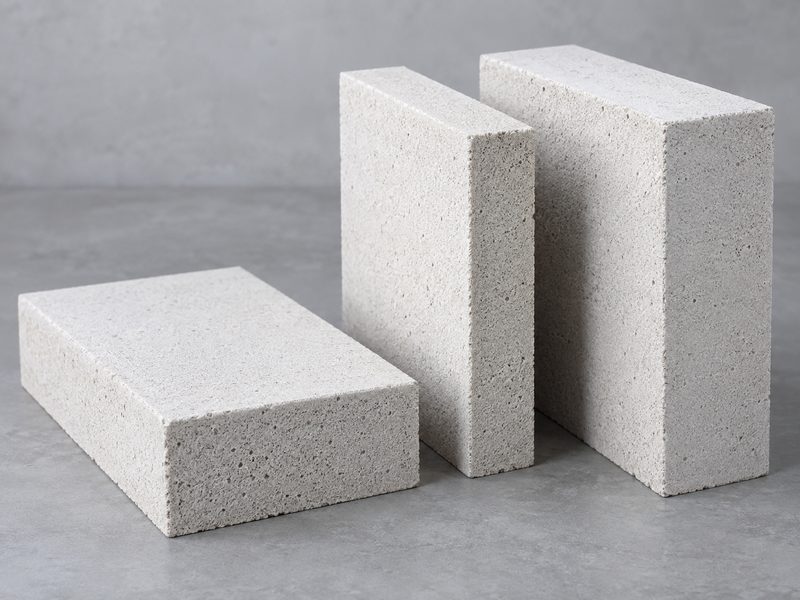
An AAC block is a lightweight masonry unit made from autoclaved aerated concrete. It is usually produced in rectangular shapes and used for wall construction. AAC blocks are larger than traditional clay bricks, but much lighter than ordinary concrete blocks.
AAC blocks are mainly used for:
- Interior partition walls
- Exterior infill walls
- Residential buildings
- Commercial buildings
- Low-rise and mid-rise construction
- Industrial building walls
The main advantage of AAC blocks is that they are easy to handle, cut, transport, and install. Because of their accurate size and large format, they can reduce construction time and mortar consumption compared with traditional bricks.
What Is an AAC Panel?
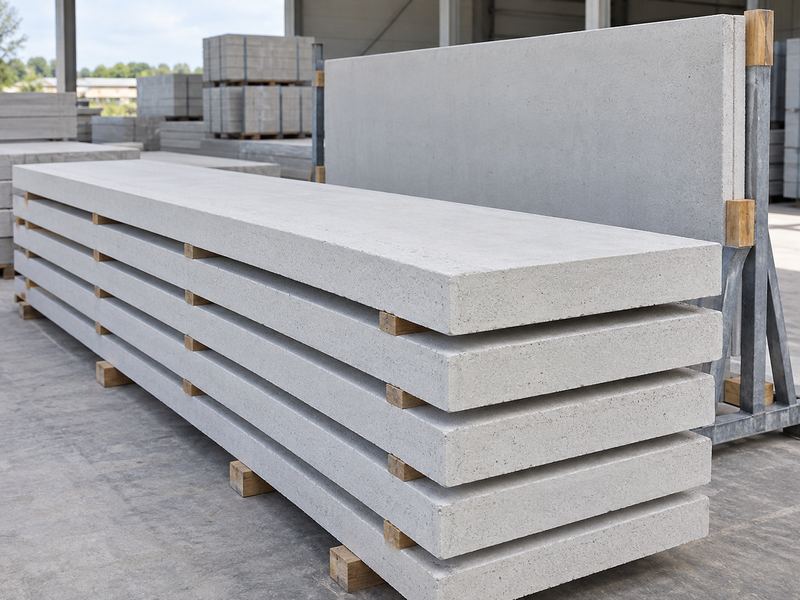
An AAC panel is a larger prefabricated building component made from autoclaved aerated concrete. Unlike AAC blocks, AAC panels usually contain steel reinforcement inside. This reinforcement helps improve bending resistance and structural performance.
AAC panels can be used for:
- Wall panels
- Partition panels
- Floor panels
- Roof panels
- External wall systems
- Prefabricated building systems
AAC panels are normally produced in longer and larger sizes than AAC blocks. They are often installed with cranes or lifting equipment, especially in large commercial or industrial projects. Because panels cover a larger area at one time, they can greatly improve construction speed.
AAC Block vs AAC Panel: Basic Comparison
| Item | AAC Block | AAC Panel |
| Product form | Small masonry block | Large prefabricated panel |
| Reinforcement | Usually no steel reinforcement | Usually contains steel mesh or rebar |
| Installation | Manual masonry work | Mechanical lifting and installation |
| Application | Wall construction | Wall, floor, roof, and prefab systems |
| Construction speed | Faster than bricks | Faster than AAC blocks |
| Equipment requirement | Standard AAC block production line | AAC panel line with reinforcement system |
| Labor requirement | Medium | Lower on-site labor, but needs lifting equipment |
| Project type | Residential and general buildings | Prefabricated, commercial, and industrial buildings |
Main Differences Between AAC Block and AAC Panel
Although AAC blocks and AAC panels share the same basic material, they are different in many ways.
Size and Shape
AAC blocks are smaller and easier to carry by hand. They are installed one by one, similar to traditional bricks or concrete blocks. Common AAC block sizes vary by market, but they are usually designed for masonry walls.
AAC panels are much larger. They can be several meters long and are designed to cover a large wall, floor, or roof area. Because of their size, they require mechanical handling during transportation and installation.
Size Difference
| Product | Typical Feature |
| AAC block | Smaller, hand-installable masonry unit |
| AAC panel | Larger prefabricated component |
| AAC block | Suitable for flexible wall layout |
| AAC panel | Suitable for fast large-area installation |
Reinforcement Structure
Most AAC blocks do not contain steel reinforcement. They are mainly used as non-load-bearing or infill wall materials. Their strength depends on the AAC material itself.
AAC panels usually contain steel reinforcement cages or steel mesh. The reinforcement allows panels to resist bending forces, making them suitable for wall panels, floor panels, and roof panels.
One of the most significant distinctions between AAC blocks and AAC panels is this. The steel reinforcement makes AAC panels more suitable for prefabricated construction and large-span applications.
Production Process
Numerous process processes, including as raw material preparation, batching, mixing, pouring, pre-curing, cutting, autoclaving, and packing, are shared by the manufacturing of AAC blocks and AAC panels. However, AAC panel production requires additional equipment and process control.
AAC panel production usually includes:
- Steel bar processing
- Mesh cage welding
- Anti-corrosion treatment
- Reinforcement assembly
- Panel mold positioning
- Reinforced cake cutting
- Panel handling and packing
Because of these extra steps, AAC panel production lines are generally more complex and require higher investment than standard AAC block production lines.
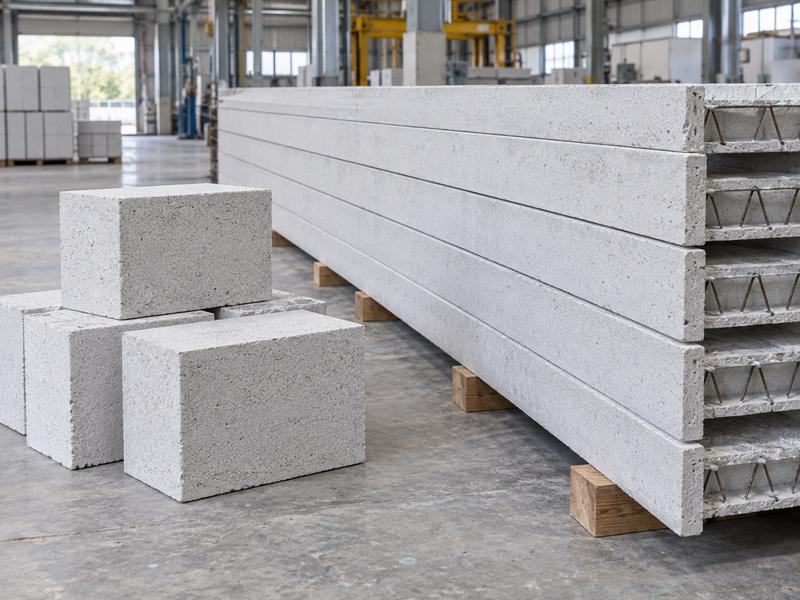
AAC Block and AAC Panel Production Comparison
| Production Section | AAC Block | AAC Panel |
| Raw material preparation | Required | Required |
| Batching and mixing | Required | Required |
| Pouring and pre-curing | Required | Required |
| Cutting | Required | Required |
| Autoclaving | Required | Required |
| Steel reinforcement | Not usually required | Required |
| Anti-corrosion treatment | Not required | Often required |
| Handling system | Standard | More advanced |
| Investment level | Lower | Higher |
Installation Method
AAC blocks are installed by masons using thin-bed mortar or adhesive. Workers place the blocks layer by layer to form walls. AAC blocks are appropriate for a variety of construction projects due to their straightforward and adaptable installation method.
AAC panels are installed differently. Because panels are large and heavy compared with blocks, lifting equipment is usually needed. Panels are placed in position and connected with special fasteners or installation systems. This method can reduce on-site labor and shorten construction time.
Construction Speed
AAC blocks are faster to install than traditional clay bricks because they are larger and more accurate. However, AAC panels are even faster because one panel can cover the area of many blocks.
For projects where speed is important, such as industrial workshops, warehouses, prefabricated buildings, schools, hospitals, and commercial complexes, AAC panels can offer a major advantage.
Construction Speed Comparison
| Product | Construction Speed | Reason |
| Clay brick | Slow | Small size and more mortar joints |
| AAC block | Medium to fast | Larger size and accurate dimensions |
| AAC panel | Very fast | Large prefabricated units cover more area |
Labor Requirement
AAC blocks require skilled masonry workers. Although they are easier to install than traditional bricks, construction still depends on manual work.
AAC panels can reduce manual masonry work because panels are prefabricated and installed in larger units. However, panel installation requires lifting equipment, installation planning, and trained workers.
Therefore, AAC blocks may be more suitable for markets with lower labor costs and flexible construction methods, while AAC panels are more suitable for markets where labor cost is high or construction speed is critical.
Benefits of AAC Blocks
Because they provide an excellent mix between cost, performance, and building convenience, AAC blocks are widely used.
Main Advantages
- Lower production line investment compared with AAC panels
- Easy transportation and storage
- Flexible wall construction
- Simple installation method
- Good thermal insulation
- Good fire resistance
- Lightweight structure
- Suitable for many building types
- Easier market acceptance in developing regions
AAC blocks are especially suitable for investors who want to enter the AAC market with a manageable production scale. They are also suitable for contractors who need a lightweight wall material that can replace traditional bricks.
Advantages of AAC Panels
AAC panels are increasingly popular in modern construction because they support faster, more industrialized building methods.
Main Advantages
- Faster installation speed
- Suitable for prefabricated construction
- Reinforced structure for larger applications
- Can be used for walls, floors, and roofs
- Reduces on-site masonry work
- Improves project efficiency
- Supports modern building systems
- Better for large-scale commercial and industrial projects
AAC panels are often selected for projects that require high construction speed, better dimensional control, and prefabricated building solutions.
Applications of AAC Blocks
AAC blocks are widely used in traditional and modern building projects. They are mainly used for wall construction.
| Application | Reason for Using AAC Blocks |
| Residential buildings | Lightweight, thermal insulation, easy installation |
| Apartment buildings | Reduces structural load |
| Commercial buildings | Faster wall construction |
| Interior partitions | Easy cutting and flexible layout |
| Exterior infill walls | Good insulation and fire resistance |
| Industrial buildings | Durable and cost-effective wall material |
AAC blocks are a practical choice for projects where wall layout may change or where manual construction is still preferred.
Applications of AAC Panels
AAC panels are more suitable for projects that require prefabrication, fast installation, or larger building components.
| Application | Reason for Using AAC Panels |
| Prefabricated buildings | Fast installation and factory-made accuracy |
| Industrial workshops | Large wall areas and quick enclosure |
| Warehouses | Efficient wall and roof systems |
| Commercial buildings | Shorter construction period |
| Floor systems | Reinforced panels can support specific loads |
| Roof systems | Lightweight and insulated roof components |
AAC panels are often used in projects where construction speed and system integration are more important than simple material cost.
Which Is More Economical?
The type of project determines the response.
AAC blocks usually have a lower product price and lower production investment. For small and medium construction projects, AAC blocks may be more cost-effective because they are easy to buy, transport, cut, and install.
AAC panels usually have a higher production cost because they require steel reinforcement and more complex manufacturing equipment. However, they can reduce construction time and on-site labor. For large projects, the overall project cost may be lower when using AAC panels because they speed up installation and reduce labor dependency.
Cost Comparison
| Cost Factor | AAC Block | AAC Panel |
| Product cost | Usually lower | Usually higher |
| Production line investment | Lower | Higher |
| Installation labor | Higher than panels | Lower on site |
| Installation speed | Medium to fast | Very fast |
| Equipment needed on site | Simple tools | Lifting equipment |
| Best for | Flexible wall construction | Fast prefab construction |
For Investors: Should You Produce AAC Blocks or AAC Panels?
For building material investors, the choice between AAC block and AAC panel production depends on local market demand, investment budget, technical ability, and target customers.
If the local market mainly uses masonry walls and traditional construction methods, AAC block production may be a better starting point. It requires lower investment and is easier to promote to builders, contractors, and distributors.
If the local market is moving toward prefabricated buildings, industrialized construction, or large commercial projects, AAC panel production may offer better long-term growth. However, it requires higher investment, better technical management, and stronger market education.
Investor Decision Table
| Investor Situation | Recommended Product |
| New investor with a limited budget | AAC block |
| The local market still uses masonry walls | AAC block |
| Demand mainly from residential buildings | AAC block |
| The market focuses on fast construction | AAC panel |
| Customers are industrial or commercial builders | AAC panel |
| Strong demand for prefab building systems | AAC panel |
| Investor wants lower technical complexity | AAC block |
| Investor wants higher-value products | AAC panel |
Can One AAC Plant Produce Both Blocks and Panels?
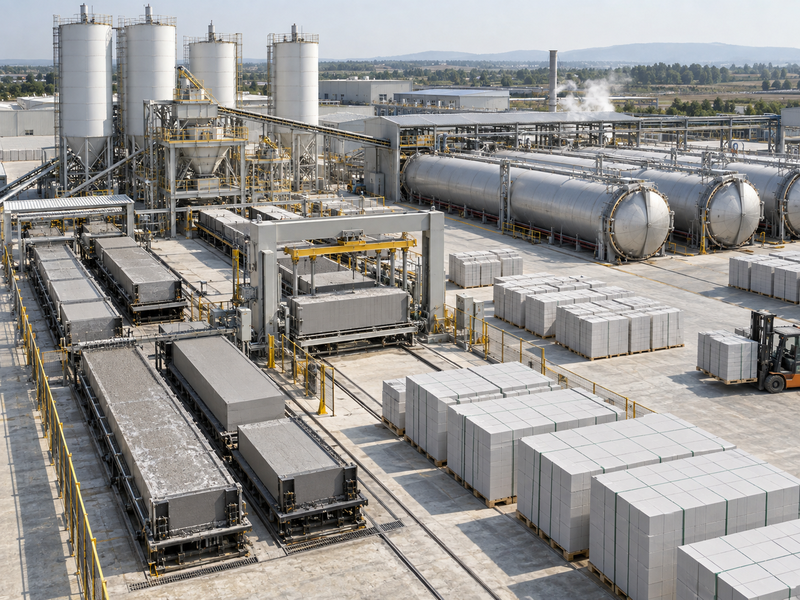
Yes, some AAC production lines can be designed to produce both AAC blocks and AAC panels. However, the plant must include panel-specific systems, especially reinforcement preparation and panel handling equipment.
A combined AAC block and panel production line may include:
- Raw material preparation system
- Batching and pouring system
- Cutting machine
- Autoclave system
- Steel mesh welding system
- Anti-corrosion treatment system
- Panel assembly system
- Block and panel handling system
- Packing system
For investors with enough budget and strong market demand, a combined production line can provide more product flexibility. However, the equipment configuration, workshop layout, and operation management will be more complex.
How to Choose Between AAC Block and AAC Panel
When choosing between AAC block and AAC panel, buyers and investors should consider the following factors:
- Building type
- Project size
- Construction speed requirement
- Labor cost
- Equipment availability
- Transportation conditions
- Local construction standards
- Market acceptance
- Budget
- Long-term development plan
For small and medium projects, AAC blocks are often easier to use. For large-scale and prefabricated projects, AAC panels can provide higher efficiency.
AAC blocks and AAC panels offer similar benefits, including lightweight structure, insulation, fire resistance, and sound reduction, but they serve different construction needs.
AAC blocks are easier to install and require lower investment, while AAC panels are larger, reinforced, faster to install, and better for prefabricated or industrial projects.
The right choice depends on project needs, market demand, budget, and long-term business strategy.