
Automate the AAC production tasks that repeatedly cause measurable quality losses, unsafe manual exposure, or delays at the plant’s actual bottleneck. For many plants, reliable measurement and batching control deserve attention before more elaborate handling systems, but the sequence must follow operating evidence. A fast automatic machine adds little value when unstable slurry, unavailable moulds, or insufficient packing capacity still limits accepted output.
Treat automation as a staged operating improvement rather than a single purchase of a fully automatic line. Each stage should have a defined loss to remove, interfaces to manage, and a practical acceptance measure. The result should be easier for operators to control and maintain.
Start With a Loss Map: Where Does the Shift Go?
Record what prevents the line from producing accepted products during a representative mix of shifts. Include waiting, rework, cleaning, adjustment, breakdowns, material shortages, and product changes. Separate the time a machine is stopped from the time that stoppage actually constrains the whole line.
Use the same product basis when comparing shifts. A shift making several difficult sizes may need more adjustments than one making a single standard product. Without that context, automation can be blamed for losses caused by scheduling or raw material variation.
- Log the start and end of each interruption and its immediate cause.
- Identify the process section that limits accepted output during that period.
- Count rejected or damaged product separately from lost production time.
- Record the manual action needed to restart or stabilize the process.
- Have the shift team separate repetitive movements suitable for a fixed sequence from interventions that depend on assessing material condition.
The review of AAC production capacity bottlenecks can help structure this baseline. Use measured local losses to choose the first project instead of copying another factory’s automation sequence.
Priority One: Can the Process Trust Its Measurements?
Where input variation drives rejected blocks, begin with instrument reliability and a traceable record of each batch. Before adding automatic decisions, verify that the controller receives trustworthy measurements and the intended recipe revision. An inaccurate signal can otherwise make an automatic sequence repeat the same dosing error throughout the shift.
Where Should Batching Control Begin?
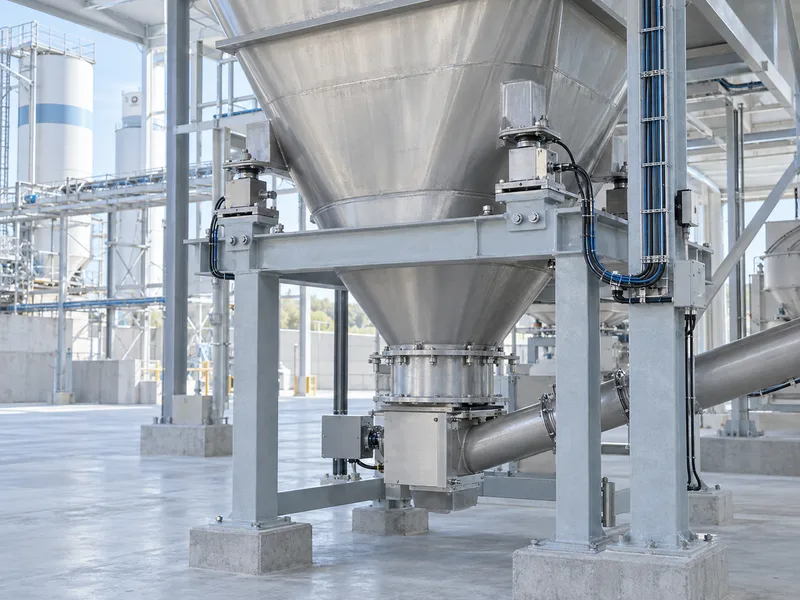
Check weighing equipment, material delivery, valve behavior, and the relationship between the displayed value and the quantity that reaches the mixer. The controller needs to account for the actual equipment response, including material still moving after a stop command. Set the performance requirement around delivered quantity and repeatability.
Review batching accuracy from scale to mixer before defining a software upgrade. Loose supports, buildup, inconsistent feed, or poor calibration cannot be corrected by adding a more attractive operator screen. Resolve the physical cause and then validate the control change.
- Restrict recipe changes to authorized roles and record the revision.
- Associate batch records with raw material conditions and product results.
- Make abnormal measurements visible to the operator.
- Provide a defined response when a sensor fails or a reading becomes implausible.
Laboratory feedback remains important even with automatic dosing. A recipe that worked with one raw material supply may need review when that supply changes. The automation system should support controlled adjustments, not encourage unrecorded changes during a difficult shift.
Priority Two: Can Transfers Follow the Process Rhythm?
Automate repetitive transfers when manual movement creates queues, inconsistent positioning, or unnecessary exposure around moving equipment. The design must coordinate the sending station, transport unit, and receiving station. A transfer vehicle cannot solve a downstream space shortage by moving faster.
Measure the complete transport task, including waiting, positioning, loading, travel, unloading, and return. Confirm that moulds and side plates are available in sufficient quantity. Also examine what happens when one receiving position is unavailable.
For precuring and cutting, the material condition matters alongside timing. An automatic sequence should not send a cake to cutting merely because a timer has expired if the approved process requires a readiness check. Define how the operator handles exceptions and how the system records that decision.
Integration work often determines the real project cost. Include position sensing, controls communication, guarding, access routes, and commissioning across machine boundaries. Require the supplier to demonstrate a controlled recovery after an interrupted sequence without relying on undocumented operator tricks.
Priority Three: Is Packing Holding Back Saleable Output?
Prioritize separation, grouping, conveying, or strapping when finished products accumulate faster than the packing area can process them. This can be especially valuable where repetitive handling causes breakage or where package consistency affects delivery performance. First verify that the products arrive in a condition suitable for the proposed handling method.
Observe the difficult cases as well as the standard bundle. Different block sizes, incomplete groups, damaged edges, and changes in pallet format can disrupt a packing sequence. Specify how these cases are identified, removed, or processed.
Runding’s AAC packing equipment covers several distinct tasks, so a targeted improvement may be possible without replacing the entire packing area. Choose the equipment around the package specification and measured queue rather than the appearance of a highly automated line.

Which Candidate Deserves the First Budget?
Compare candidates using recoverable loss, implementation difficulty, and the team’s ability to support the change. Safety obligations must be addressed on their own merits and should not depend on a short payback calculation. For other improvements, keep the financial estimate tied to benefits the plant can actually realize.
| Candidate | Strong Reason to Prioritize | Condition to Resolve First |
| Batch measurement and recipe control | Repeated input variation affects accepted quality | Reliable instruments and stable material delivery |
| Mould or cake transfers | Documented waiting and positioning losses constrain flow | Receiving space, circulation capacity, and safe interfaces |
| Separation and packing | Handling damage or queues delay usable shipments | Product condition and package requirements |
| Plant-wide data reporting | Decisions are limited by missing loss information | Consistent definitions and reliable source signals |
As an illustrative screening calculation, assume a project costs 48 budget units and produces 24 units of annual cash benefit after additional maintenance and service costs. Simple payback would be two years. If only half the expected benefit is realized, the same calculation becomes four years.
Those numbers are not an AAC industry benchmark. Include installation downtime, training, spares, licensing, and integration in the investment figure. Count additional sales only where demand and downstream capacity can absorb the extra accepted output.
A labor saving is not automatically a cash saving. If employees remain necessary for cleaning, quality checks, or fault response, describe the benefit as reassigned capacity or reduced overtime where appropriate. Avoid counting the same recovered production twice under both throughput and downtime benefits.
How Should the First Automation Project Be Proved?
Run a bounded pilot with an agreed baseline and acceptance period. Test normal production, changeovers, and realistic interruptions under the supplier’s approved procedures. Keep the comparison consistent for product mix, raw materials, and operating hours.
What Belongs in the Handover?
The handover should include operator instructions, maintenance tasks, current drawings, configuration backups, and a clear support route. Confirm access rights and replacement-part identification before the supplier leaves. Assign responsibility for reviewing alarms and maintaining the data quality after startup.
- Verify that the targeted loss declined during comparable production.
- Check whether a new queue or recurring fault appeared elsewhere.
- Confirm that operators can recover from permitted abnormal conditions.
- Update spare stocks and preventive maintenance for the new equipment.
- Use the measured result to decide the next investment stage.
Successful AAC automation leaves the plant with a more predictable process and fewer recurring interventions. The first project should make the next decision easier by producing trustworthy evidence. Expand only after the operating team can sustain the improvement through ordinary shifts and product changes.