
AAC plants should compare rubber and steel ball mill liners as complete lining systems matched to the actual grinding duty. The decision should combine feed and grinding-media conditions, liner profile, usable mill volume, observed wear and the time needed to replace worn parts. A lower purchase price or a lighter component is useful only if the mill continues to deliver accepted material reliably.
What Information Defines the Liner Duty?
Begin with the material stream rather than the name of the factory. A wet sand mill and a dry binder-preparation mill can impose different requirements even when both serve the same AAC production line. Record the intended process, feed envelope and receiving specification before asking for alternative lining materials.
Provide the supplier with the mill dimensions, rotational speed, grinding-media size distribution and charge, together with available operating records. Include feed size, abrasiveness, moisture or slurry condition and the normal operating temperature range. If any values are estimates, identify them as estimates instead of presenting an apparently complete but unreliable data sheet.
Use the AAC ball mill equipment specification as a starting reference for the machine configuration. Confirm the actual installed arrangement against drawings and inspection records before ordering replacement wear parts. A catalogue model designation alone does not establish that two machines use interchangeable liners.
Which Rubber and Steel Differences Matter in Practice?
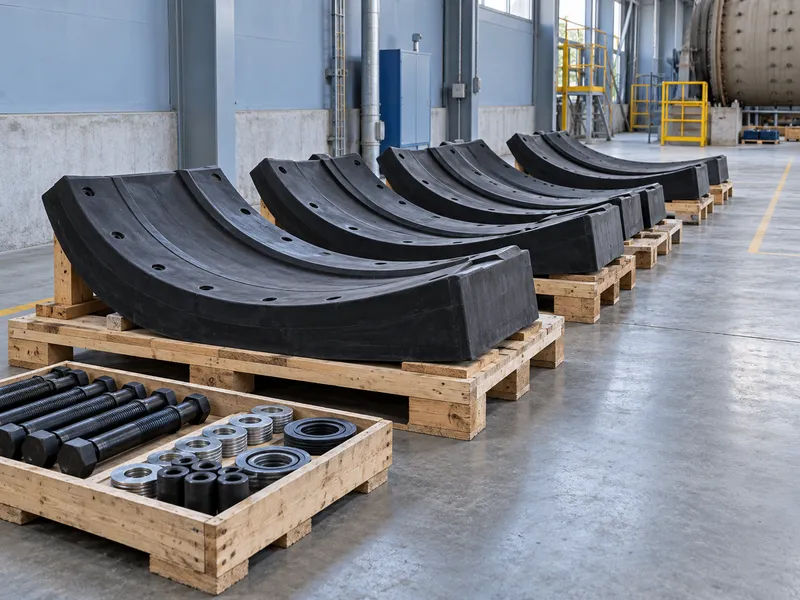
Rubber linings can offer lower component weight and reduced noise, while metallic systems provide another range of material and profile choices. Treat those potential advantages as questions for the mill supplier to demonstrate under the proposed operating conditions. The offer must specify exactly what the liner is made from and show the shape of the supplied pieces.
Ask each supplier to state the limits relevant to the proposed duty, including temperature, chemical exposure and impact conditions. Avoid applying a general claim about rubber or steel to every material sold under that description. A proposal should identify the actual grade or compound and the conditions under which the supplier expects it to work.
| Review Point | Question for Either Option |
| Material | Which grade or compound is proposed for this duty? |
| Geometry | How does the profile change as the liner wears? |
| Handling | Can the heaviest replacement piece be moved safely? |
| Performance | What accepted output and wear records support the offer? |
| Supply | Can a complete compatible replacement set arrive on time? |
A hybrid arrangement may also deserve evaluation if a supplier proposes it for a specific reason. However, adding a third option is useful only when its interfaces, operating expectations and replacement scope are clear. Require the lining supplier to approve the complete assembly, including the connections between unlike components.
Why Is Profile as Important as Material?
The lining helps determine how the charge moves as the mill rotates. Its shape and spacing must therefore work with the mill speed and charge, while its thickness also occupies space inside the shell. Compare the proposed operating geometry rather than treating the lining as a passive protective skin.
Ask for drawings showing the new condition and the planned replacement condition. A thick liner may provide wear allowance, but its installation must still support the required internal working space. Likewise, a liner that remains physically intact may no longer provide the intended profile near the end of its service interval.
The procurement question is whether useful performance is maintained through the proposed campaign. Request a clear description of the condition that triggers replacement and who will assess it. Remaining thickness alone should not be substituted for the manufacturer’s full inspection criteria.
How Should Wear Life Be Compared Fairly?
Compare records on a common operating basis. Calendar months are difficult to interpret when mills run different hours or process different quantities. Where records allow, relate the campaign to dry tonnes processed and explain changes in feed, fineness and operating practice.
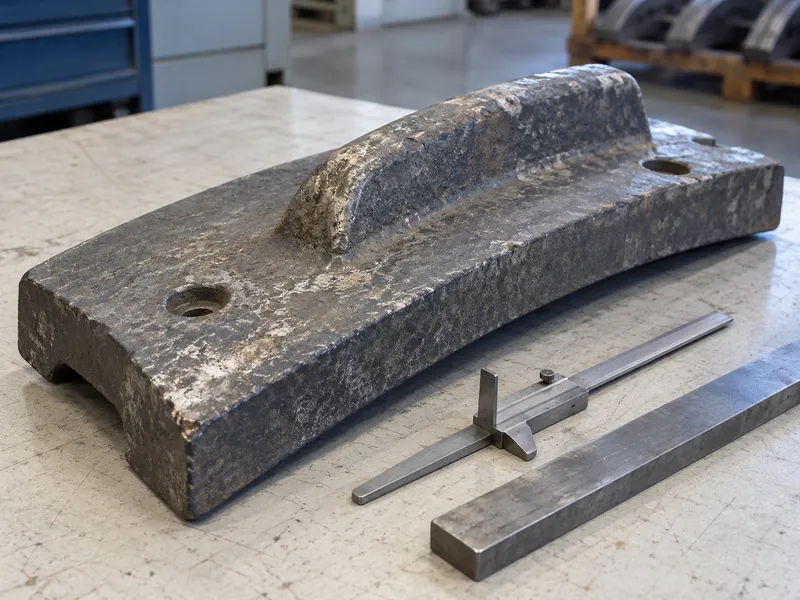
Separate a worn-out component from a damaged or incorrectly installed one. A crack, loose fixing or abnormal local wear pattern may require investigation rather than a simple switch to another material. Photograph the condition, record its location and retain relevant operating history for the supplier’s review.
For a new plant without its own records, ask for reference duties that resemble the proposed application. Similar mill dimensions do not make a reference comparable if the feed and grinding conditions differ substantially. Record those differences so that a planning estimate is not mistaken for an established site result.
- Identify the feed and product specification used for the comparison.
- Record operating hours and processed dry tonnes for each campaign.
- Record interruptions, damaged pieces and unplanned replacements separately.
- State the inspection method and replacement criteria.
- Keep measured observations separate from expected service life.
What Does a Realistic Relining Plan Include?
Review the complete replacement sequence with the maintenance team before choosing the lining. Include the available lifting equipment, access openings, component weights, tooling and the route used to remove and bring in parts. A lightweight option can still be difficult to install if the work area and handling method have not been planned.
Obtain the manufacturer’s installation instructions and identify the fastening, sealing and inspection requirements for the selected design. Do not reuse an old tightening value or installation method merely because the new parts fit the same shell. The approved procedure should govern the work.
Maintenance inside a mill requires the site’s formal isolation and entry arrangements, carried out by qualified personnel. The article’s purchasing checklist cannot replace those procedures. For procurement purposes, the practical issue is whether the proposed design can be maintained within the plant’s approved system and available facilities.
Include restart checks and the time needed to recover stable production in the shutdown estimate. A quotation covering only physical removal and installation may understate the interruption experienced by batching. Review the full maintenance window, from stopping feed to dependable accepted output.
How Can Buyers Calculate a Useful Cost Comparison?
Build the comparison around an agreed period or production campaign. Include the complete wear-part set, transport, installation consumables, handling and planned maintenance labour. State how downtime is valued and keep that assumption visible in both offers.
For an illustrative calculation, a campaign costing 24,000 currency units over 60,000 accepted dry tonnes has a direct campaign cost of 0.40 per tonne. An alternative costing 18,000 over 30,000 accepted tonnes has a direct campaign cost of 0.60 per tonne. These are hypothetical arithmetic examples, not supplier prices or predicted liner lives.
Energy and product quality should be reviewed on the same basis if they differ between proposals. A lower electrical reading does not establish an improvement when output or required fineness has also fallen. Use the grinding fineness and slurry stability requirements to keep the acceptance discussion connected to the AAC process.
Which Liner Details Belong in the Purchasing Specification?
Freeze the component drawings, material identification and full delivery scope. Confirm whether the supply includes the required fasteners, seals and installation documentation. Identify any parts that must be replaced together and any that are intended for independent replacement.
Agree how the plant will inspect the first campaign and report unexpected wear. The supplier should know which measurements will be available and when the plant can stop for inspection. Keep these inspection records with the part drawings so that the next replacement decision can use the mill’s own operating history.
Finally, check replacement lead time against the plant’s inventory and shutdown plan. A technically suitable lining that cannot be replenished when needed may create a preventable production constraint. Select the system that meets the duty with documented compatibility, maintainable installation and a credible supply plan.