
Before adding AAC panel production, confirm that the intended panel products can be designed, approved, reinforced, manufactured, cured, handled and sold through the existing plant with the proposed additions. Review the whole production route and its shared capacity, rather than assuming that a reinforcement station alone makes a block line panel-ready. The investment should proceed only when technical compatibility and a workable commercial plan are supported by evidence.
Gate One: Define the Panel the Market Will Accept
Specify the intended application before choosing machinery. Wall, floor and roof products can involve different design responsibilities, product properties, reinforcement arrangements and installation systems. Structural and nonstructural applications must not be treated as interchangeable.
Identify the dimensions, performance documentation and approval route required in the destination market. The responsible designers and conformity specialists should establish applicable requirements and testing. Existing block certificates do not automatically establish compliance for a reinforced panel product.
Ask prospective customers who approves the product, which project documents they require and how installation will be supported. Include connection details, handling arrangements and installer capability in the commercial discussion. A low factory price will not overcome an incomplete system that a project cannot approve or install.
The comparison of AAC blocks and AAC panels helps clarify the change in product and application. Use it as an initial orientation, then develop specifications for the actual panel range. A broad market interest in panels is not yet a production order.
Gate Two: Establish the Reinforcement Route
Map how steel reinforcement will be received, fabricated, checked, protected and positioned. Define the approved design and production tolerances through the relevant technical process. Reinforcement preparation must supply the required arrangements at the pace and consistency expected by casting.
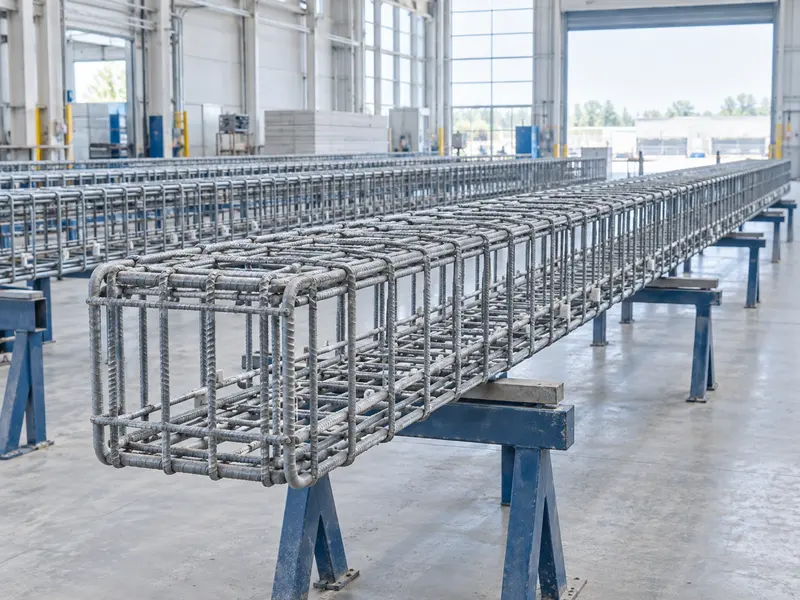
Review welding capability, identification, corrosion-protection application and any required drying or handling stages. The specific protection system and process conditions must be qualified for the intended product. Do not substitute a convenient coating or treatment merely because it fits an available workstation.
Consider the handling frames, positioning devices and supports needed to place reinforcement accurately. Confirm their compatibility with moulds and the selected production sequence. The factory needs a method of verifying position and maintaining identification through later stages.
Review reinforcement welding and corrosion protection alongside the supplier’s proposed equipment. The useful output is an agreed process route, inspection points and responsibility for nonconforming assemblies. Purchasing fabrication equipment without these decisions leaves a critical part of the panel process undefined.
Gate Three: Check Every Shared Machine
Walk through the existing line with the proposed panel dimensions and handling method. Record each machine’s relevant limits and the evidence supporting compatibility. A statement that a line can make panels needs to identify which products, modifications and operating conditions it covers.
| Existing Area | Compatibility Question | Evidence Needed |
| Moulding and pouring | Can the approved reinforcement arrangement be positioned without obstructing the intended process? | Product drawings and a reviewed insertion sequence |
| Precuring and cutting | Can the cake and reinforcement pass through the required cutting arrangement? | Supplier-approved dimensions, clearances and cutting method |
| Transfer and grouping | Are product supports and machine capacities suitable? | Reviewed loads, handling positions and equipment limits |
| Autoclaving | Does the proposed loading and process support the product? | Approved loading arrangement and validated process basis |
| Separation and packing | Can individual panels be separated and protected without unacceptable damage? | Trials and a defined handling and packaging method |
Check controls and recipes as well as mechanical fit. Product identification, reinforcement records and inspection status may need to accompany the batch or panel through the line. Operators should not rely on memory to distinguish products awaiting different checks.
Record where an existing asset needs replacement, adaptation or no change. Obtain the supplier’s written assessment of interfaces that affect performance or safety. The assessment should cover the actual plant configuration, including previous modifications that may not appear on its original drawings.
Gate Four: Test the Shared Capacity Assumption
A mixed block-and-panel line has to allocate common equipment time. Reinforcement preparation, mould availability, cutting, transfer, curing and packing may create different constraints from the established block schedule. More saleable panel volume can therefore reduce block output even without a visible mechanical bottleneck.
Model complete production campaigns rather than comparing only nominal daily capacities. Include product changeovers, inspections, required loading patterns and the time needed to return to block production. Ask the supplier which assumptions are embedded in the quoted panel capacity.
Review autoclave loading by the actual product arrangement and validated process. Do not assume that a cubic metre of panel product occupies the same usable production capacity as a cubic metre of blocks. Supports, product mix and loading restrictions can change the practical result.
Compare conservative sales scenarios with that production model. A panel order may offer attractive revenue but require a campaign that disrupts regular block customers. The commercial decision should consider the contribution and service obligations of both products.
Gate Five: Follow a Panel Beyond the Factory Door
Check panel handling at every transfer, including storage and loading. The responsible engineering team should define lifting points, support locations and equipment requirements for the approved product. Dimensions alone do not establish that an existing block-handling method is suitable.
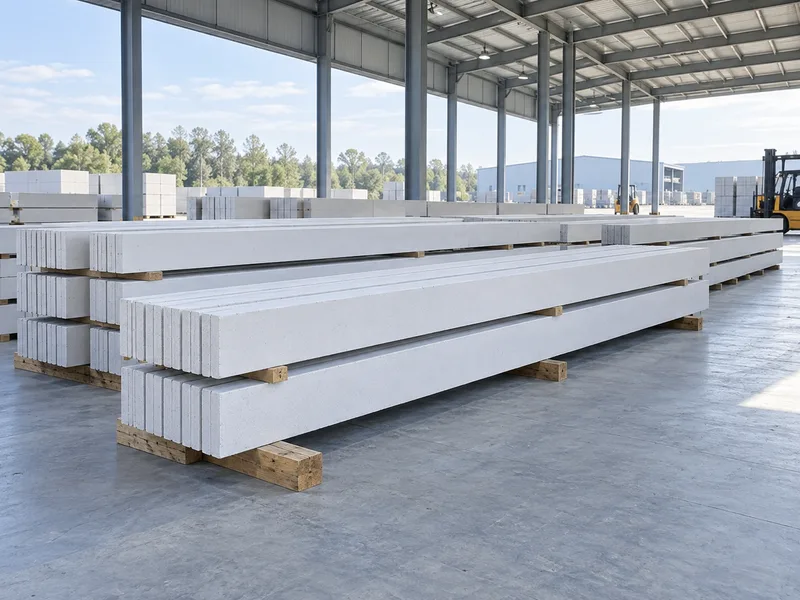
Have the product engineering team specify the support arrangement for each panel size, then allocate yard space that accommodates those supports and the intended handling equipment. Maintain product identification and inspect stored panels before allocating them to a shipment. A yard designed around compact block packages may need different space and access arrangements for longer elements.
Review the delivery vehicle, route restrictions, load restraint and receiving site’s unloading capability with qualified logistics personnel. Confirm how products will be protected and supported in transit. A factory upgrade is incomplete if customers cannot receive the panels in usable condition.
Establish who supplies installation guidance and who is responsible for project design and connections. Keep technical claims within the documented product system. Clear responsibilities help the producer support customers without implying that a generic panel is suitable for every building.
Gate Six: Prove Quality and Traceability Before Expansion
Prepare a product-specific inspection and testing plan covering inputs, reinforcement, process control and finished panels. Define the records required to connect reinforcement and production batches to the released product. Agree what happens when a panel fails an inspection or loses its identity.
Use representative trials to confirm the proposed manufacturing route. Evaluate dimensions, reinforcement positioning and the required product performance through competent testing and review. A visually sound panel is not sufficient evidence for all specified properties.
Set acceptance criteria for the upgrade before ordering it. Include product range, operating conditions, quality records and the demonstrated production basis. The AAC panel production equipment section can form part of that scope discussion, but equipment selection follows the approved product and process requirements.
Release the Investment With a Closed Gap Register
Bring the six reviews together into one list of confirmed capabilities, required modifications and unresolved issues. Give each gap an owner, cost implication and evidence needed for closure. Separate essential conditions for the first product launch from later expansion options.
Proceed when the plant can demonstrate a coherent route from approved panel design to accepted delivery. If important compatibility or approval questions remain, fund the necessary trials and engineering work before committing the full expansion. That sequence makes the decision depend on a producible, marketable panel rather than the apparent availability of floor space.